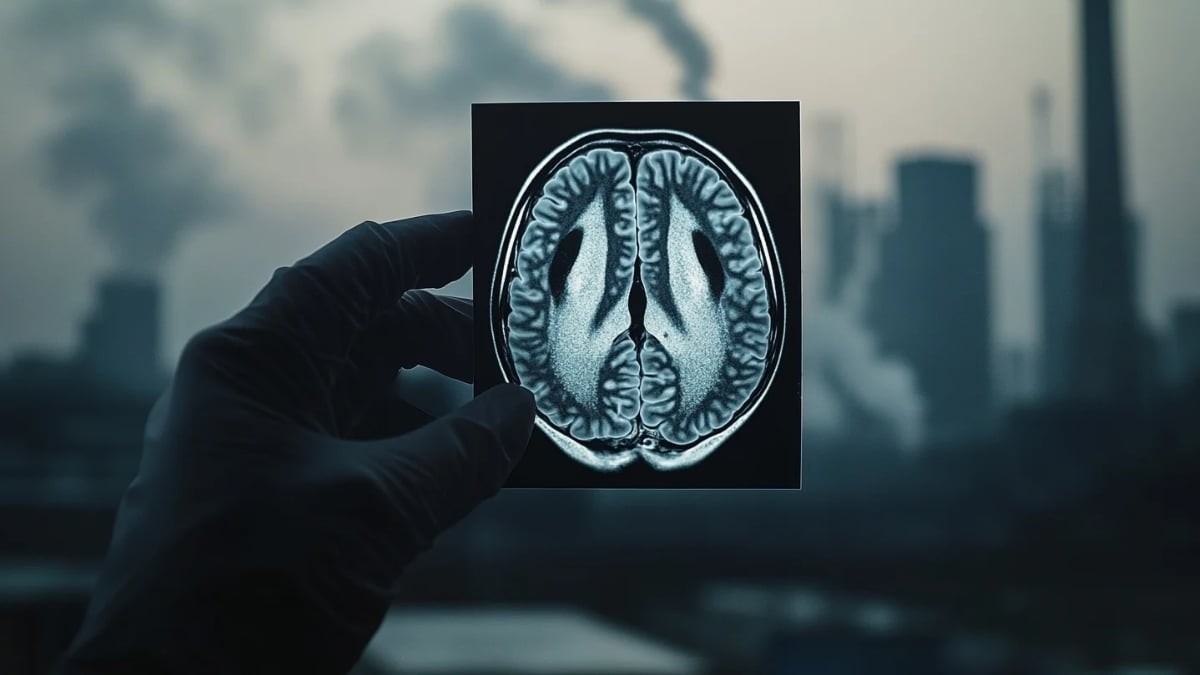
It’s obvious air pollution sucks for our lungs. We cough. We wheeze. We try not to breathe too hard when the sky turns orange.
But that’s not where it stops.
The tiniest particulates don’t just hang out in lung tissue. They slip through. They enter the bloodstream. Once in the blood, they trigger inflammation and oxidative stress that rages through the body’s systems. They cross the blood-brain barrier.
They go to work in the brain.
We’ve seen the data. PM2.5 particles are linked to a messy laundry list of neurological issues: dementia, Alzheimer’s, stroke, even depression and anxiety. Now, there is another name on that list. Parkinson’s disease.
A massive new review suggests breathing dirty air for years doesn’t just hurt your heart—it increases the likelihood you will develop one of the most debilitating neurodegenerative disorders.
The Cambridge Review: Digging Into the Data
Researchers at the University of Cambridge led the charge. They didn’t just glance at recent papers. They looked back.
The results, published in Environment International, analyzed 42 prior studies. That’s decades of data. It covers populations across North America, Europe, and Asia. It is the largest review to date on this specific link between long-term outdoor air pollution and neurodegeneration.
Why did they do it? Because the global burden of these diseases is rising. And because, unlike age or genetics, pollution is something we can actually control.
How Air Pollution Links to Parkinson’s Disease
The signal was clearest for Parkinson’s. Twenty-six of the 42 studies focused specifically on this disease.
The findings are stark. For every 5-microgram-per cubic-meter increase in long-term exposure to fine particulate matter (PM2.5), the risk of developing Parkinson’s increases by approximately 10 percent.
It gets worse with larger particles. PM10—those you can sometimes see, like pollen, dust, soot, and ash—is associated with an 18% higher risk of Parkinson’s for every 15-microgram increase.
Let’s ground this. In Central London during 2023, the average roadside PM2.5 concentration was 10 micrograms per cubic Meter. That means if you live or commute along that road, your exposure is double the threshold that studies say nudges your risk up by 10%.
“Improving air quality could have benefits extending beyond cardiovascular and health, potentially contributing to strategies to reduce burden of Parkinson’s disease.”
— Annalan Navaratnam, University of Cambridge
This isn’t a death sentence for city dwellers. Individual risk remains relatively low. Genetics, age, and diet play massive roles. But when millions of people breathe polluted air, that modest 10% bump translates into thousands of preventable cases.
Why Modifiable Risks Matter Most
Here is the critical part: You cannot change your age. You cannot rewrite your DNA. But you can influence air quality.
“The findings and lack of findings for some diseases may be down to how studies were designed,” Navaratnam noted. But the trend is undeniable. Cleaner transportation. Stricter industrial standards. Reduced emissions.
These won’t eliminate Parkinson’s. They won’t fix it. But they might lower the number of people who get it.
Consider the alternative. We spend billions treating neurodegenerative diseases that currently have no cure. If smog is a contributing factor, cleaning it up is arguably more effective than waiting for a miracle drug.
Where Else Does Pollution Hit (And Where It Doesn’t)
The news wasn’t all doom and gloom. For every other major disease reviewed, the evidence was murkier.
The researchers found no convincing link between long-term PM2.5 exposure and multiple sclerosis. They also found no clear connection to motor neuron diseases like ALS.
But—and this is a big “but”—there weren’t many studies on those conditions. Only three each for MS and ALS. Hard to draw firm conclusions when the sample size is tiny. It is possible the link exists but simply hasn’t been measured correctly yet.
“We urgently need more research, in larger population, to examine what is significant public health issue.”
This is the challenge of studying neurodegeneration. These diseases take decades to develop. People move. Pollution levels shift. Tracking a person’s lifetime exposure is notoriously difficult. You need huge datasets. You need patterns. That is what this meta-analysis provided.
The Bottom Line
Clean air is not just about aesthetics. It is not just about seeing the horizon. It is about protecting the brain.
Alexandra Tien-Smith, another Cambridge epidemiologist, put it this way. Air pollution causes adverse health impacts across every human organ system. From lungs to hearts to brains. To premature mortality.
We have the data. The question is whether we have the political will to act on it.
The study is now live in Environment International. It adds one more weight to the scale. One more reason to look at the air before we breathe.
Because the particles don’t care if you are young or old. They just want in. And once they are there, the damage may already be starting.