


For birders, a rare sighting is the jackpot. A vagrant species far from its normal range? That’s headline news. In the UK, these finds get plastered everywhere. Take the western reef heron. Usually stuck in Africa or southern Europe, this bird popped up in north Wales in June. Forums erupted. Celebration was the order of the day.
Then there is the rot.
Scientists are screaming now. They want birders to stop messing with AI. The fear? It’s poisoning the well of citizen science. Platforms like iNaturalist and Macaulay Library rely on public data. This data drives real research. It tracks habitat shifts. It monitors species ranges. But now, AI-altered images on birding forums are injecting noise into the signal. And it’s hard to tell what’s real.
The “Beauty” Trap in Wildlife Photography
Generative AI tools have made faking it easy. ChatGPT? No, image models. You can generate a high-quality fake bird in seconds. Or you can take a real photo and “enhance” it. Remove a branch. Sharpen the feathers. Make the colors pop.
The algorithm doesn’t care about biology. It cares about patterns.
In a recent commentary in Nature, researchers laid out the damage. Hundreds of fake images are already in databases. The real number? Unknown. Likely much higher. Most go unnoticed. This contaminates records collected by the public for years.
“My experience of looking at Facebook these days is that it is simply AI-generated imagery,” Dr. Alexander Lees said.
Lees, an ecologist at Manchester Met University, wrote the paper. His point is blunt. Using these photos to track species location? Difficult. Maybe impossible.
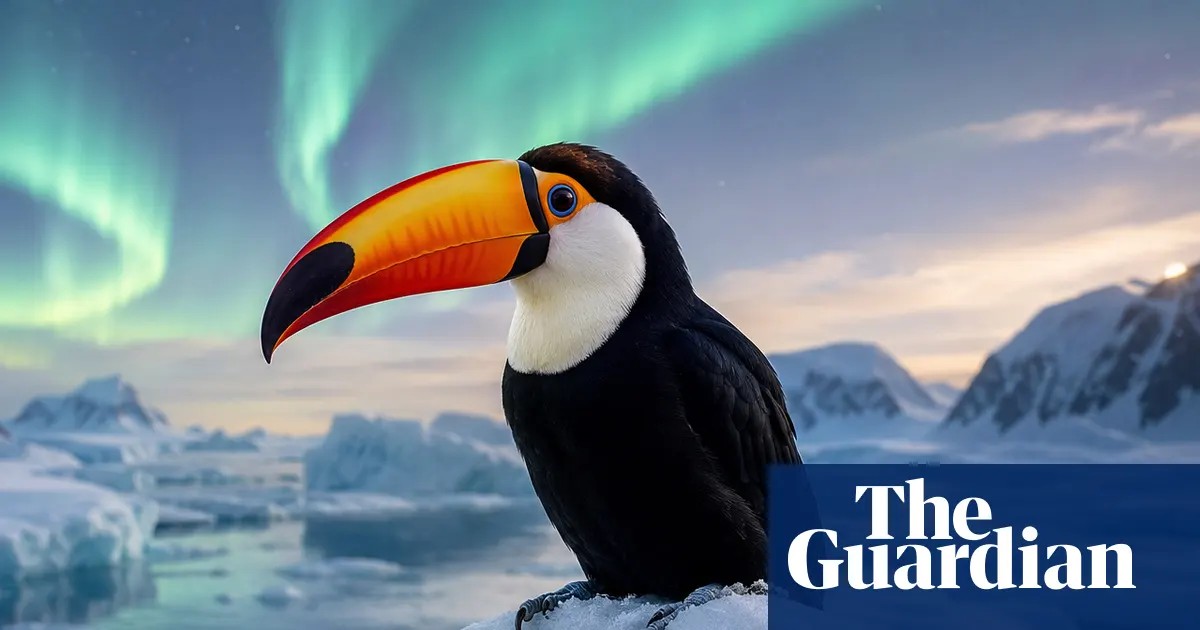
Outright hoaxes are rare. We aren’t seeing toucans in Siberia. Everyone would spot that. It’s the subtle edits that kill trust. A birder asks AI to make a picture “look better.” The software swaps feathers. Adds markings. Suddenly, you have a hybrid that never existed.
The Red-Winged Blackbird Blunder
Lees cites a specific example. A sighting of a red-winged blackbird. Central Brazil. Never seen there before. Red-winged blackbirds belong in North America. The bird in the photo? Actually an epaulet oriole. A common New World species.
The photographer used AI. They wanted a sharper, better image. The AI added the distinct red epaulets of a different bird. Result: a false record. A ghost in the data.
Wildlife photographers obsess over the perfect shot. They don’t always see the risk. The image that wins awards today might cause scientific headaches tomorrow.
Why Accurate Data Matters Now More Than Ever
The scale is still being measured. On iNaturalist, which hosts over 610 million images, only 1,400 have been flagged for AI use so far. That’s less than 0.002%. But does volume matter when the source is suspect?
These platforms act as real-time sensors. They show us climate change in action. Are plants flowering early? Are species migrating north? Conservationists need this data. They need to know where things are.
Tony Iwane, director of community support at iNaturalist and co-author of the paper, sees the value.
“It is almost like a sensor of what is happening in Earth,” Iwane said.
Most edits aren’t malicious. They’re aesthetic. But the line blurs quickly. If the data is inaccurate, the conclusions are wrong. We can’t conserve what we don’t understand.
So, when you’re editing that shot of the warbler, think twice. You aren’t just making it look nice. You’re adding noise to a critical global dataset. And once it’s out there, it’s hard to scrub.
The birdwatching community wants to help. They love the thrill of the new find. But that thrill is colliding with a new kind of digital pollution. The question isn’t just whether we can find the bird. It’s whether we can believe the picture we see.
Some say the fix is better AI detection. Others argue for stricter community guidelines. There’s no silver bullet. Just more vigilance. And maybe, a return to raw, unedited images. Until then, we keep looking. And we keep questioning.


