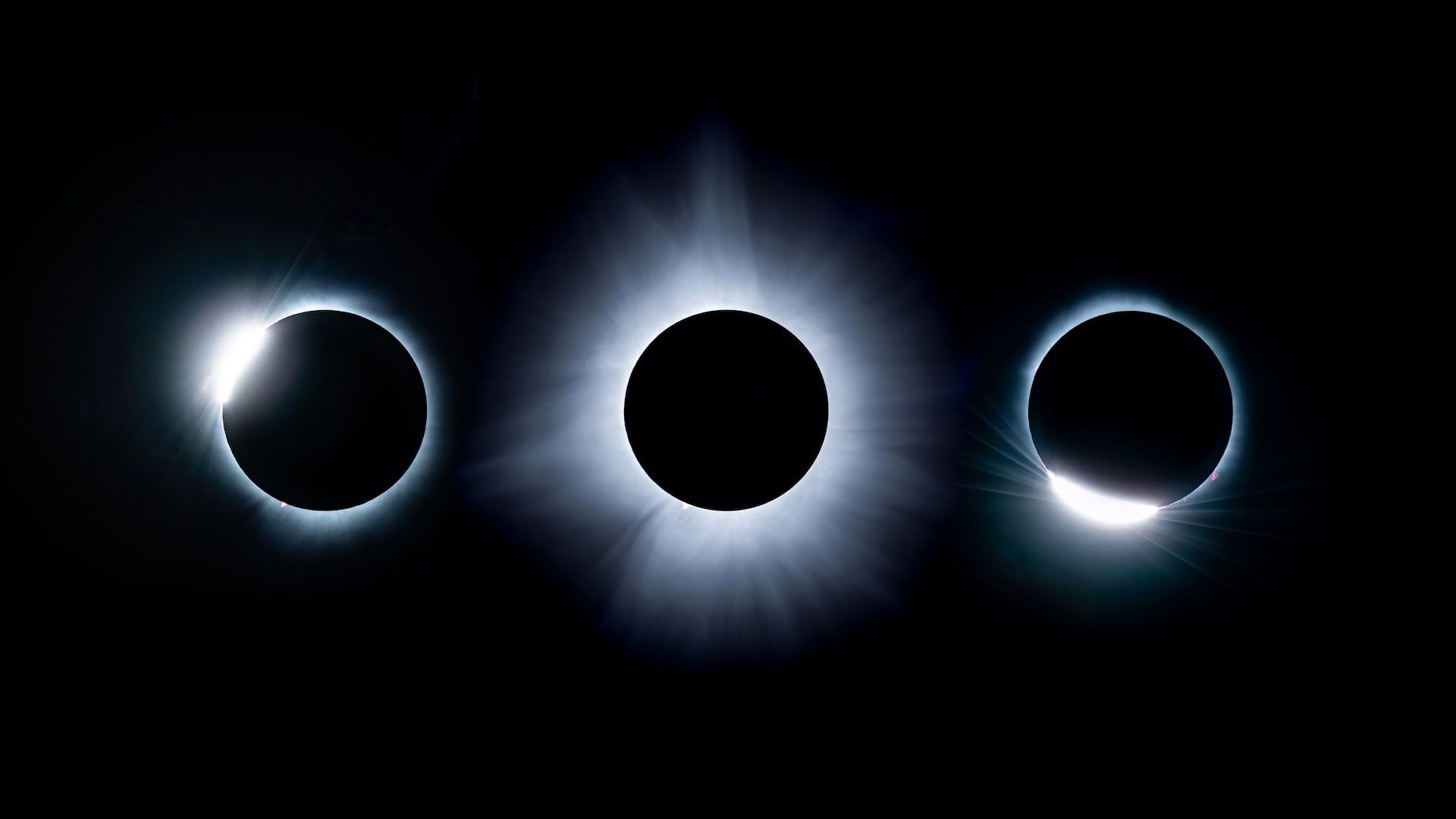
August 12, 2025 marks the date. The 2026 total solar eclipse will slice a narrow ribbon of darkness through eastern Greenland, western Iceland, and northern Spain. If you are one of the thousands heading into the path of totality, you are chasing the moon’s perfect shadow. For many, this is the first time they will witness totality — that rare few minutes when the moon completely swallows the sun, revealing the delicate, glowing corona hidden by daylight’s glare.
But here is the hard truth: packing expensive gear you have never used before does not guarantee expert images. Some show up with heavy tripods and complex rigs. Others show up with nothing but a smartphone. Who comes home with the best shots? Usually, the ones who practiced. Or the ones who kept it simple.
“Practice and rehearsal — or simplicity — are the key.”
Safety First: Never Look Without Protection
Start with the non-negotiable. You must never look at the sun directly with your naked eyes or standard optical equipment during any partial phase. You risk permanent blindness. Only during the brief window of totality is it safe to look up without protection. Before then, use specialized solar filters. Always.
Why You Don’t Need to Be in the Path of Totality
Thinking you have to be in the narrow path of totality to get a great shot? That is a myth. If you are stuck outside the path — say, across the rest of Europe or northeastern North America — you still have options.
In Europe, expect a deep partial eclipse near sunset. In many areas, over 90% of the sun will be obscured. In North America, the afternoon offers a smaller, but still striking, partial view. The drama is less intense. The photography is still viable. Just adjust your expectations.
How to Take Eclipse Photos with a Smartphone
You do not need a $3,000 camera setup. In fact, for many, a smartphone is the smartest move. It is fast, discrete, and capable of capturing the wide-angle grandeur of the event.
1. The Souvenir Shot: Smartphone + Solar Filter
For partial phases, wrap eclipse glasses around your phone’s camera lens. Hold a handheld solar viewer in front. It is crude. It is effective. It keeps you safe.
For better results, skip the DIY approach. Use a dedicated adapter like the Solar Snap. It attaches to your phone via Velcro, includes a proper filter, and has an app to help you frame the shot. You want pinpoint sharpness without the weight of professional gear? Look at smart telescopes. The ZWO SeeStar S30 Pro or the DwarfLab Dwarf Mini are plug-and-play solutions that deliver impressive detail.
2. Shooting the Corona with Mobile Tech
If you are in the path — Greenland, Iceland, or Spain — take a wide landscape shot with your phone. The phone’s lens cannot zoom in like a telephoto, but it captures context. And context is everything.
In Greenland and Iceland, the sun hangs about 25 degrees above the horizon. You can frame the eclipse against fjords, volcanoes, and mountains. In Spain, the eclipse happens late in the day. The low sun sits above villages, church towers, and ridgelines. Use that.
Quick settings: Turn off auto-flash. Enable RAW if available. Use burst mode. Or record 4K video on a tripod and extract the perfect still frames later.
Capturing the Eclipse Environment
Experienced photographers often get tunnel vision. They obsess over the corona. They forget that the eclipse changes the air. The light drops. Shadows sharpen. The atmosphere shifts. A well-composed wide-angle shot captures that mood far better than a tight crop of the sun.
Take Alan Dyer’s photo from the 2017 Wyoming eclipse. Shot with a Canon 6D and 14mm lens. He captured the dark shadow approaching from the west as totality began. It tells you what it felt like to be there. That is what you want.
How to Create Crescent Sun Projections
When the partial eclipse hits roughly 50% coverage, the sun becomes a crescent. Project it.
Grab a colander. Or a spaghetti spoon. Hold it up to the sun. The shadows cast on the ground (or on people’s faces) become tiny crescent suns. It sounds silly. It works. It creates unique portrait images that document the human experience. Thousands of people will shoot the corona. Few will shoot the light filtering through a kitchen utensil. Make yours different.
Shooting the Solar Corona: The Classic Approach
This is the gear-heavy path. The one most pros use. It requires commitment.
The Lens Choice
You need magnification. A telephoto lens between 200mm и 600mm is ideal. At 400mm, you fill the frame with the sun. At 600mm, you start seeing the fine filament details of the corona. Good options include:
* Canon RF 200-80mm f/6.3-9
* Sony FE 200-6mm f/5.6-8
* SIGMA 150-800mm DG DN OS Sport
Focus and Settings
Set your focus before totality using the solar filter. Lock it. Do not touch it. During totality, switch to manual mode. Start at ISO 100 with an aperture of f/5 to f/8.
Here is the catch: the corona has a huge dynamic range. The bright inner corona and the faint outer streamers need different exposures. Use exposure bracketing. Take a sequence of shots at different speeds. Combine them later in post-processing. If you rely on automation, you will likely miss the details.
Pro Tip: Rehearse this process. The excitement of totality leads to mistakes. The most common? Forgetting to remove the solar filter. Don’t let that happen.
Creating Eclipse Sequences
Want to show the entire journey of the moon across the sun? You need two types of sequences.
1. Close-Up Sequence
This focuses on the partial phases. Start shooting at first contact. Keep shooting through totality (with the filter removed) and back to fourth contact. You don’t need a massive lens. You just need consistency. Create a mirror image of the crescent phases on either side of the central totality shot.
2. Wide-Angle Sequence
This is more ambitious. You are combining the path of the sun with the landscape. Take a base exposure during totality to capture the twilight sky. Then, layer in images from the partial phases taken at regular intervals (every 5-10 minutes). The final result shows the sun’s path across the sky. It might even catch a bright planet. Include water. Mountains. People. It becomes a story, not just a snapshot.
Alan Dyer’s 2017 wide-angle shot used a Canon EOS Ra and 15-3mm lens. He shot every five minutes. The result is a single frame that contains minutes of history.
Final Thoughts
The 2026 eclipse is not just a celestial event. It is a test of preparation. You can go with a smartphone and a smile. Or you can go with a bag full of glass and a tripod that weighs as much as a child. Both approaches work. Just don’t expect to replicate what you’ve seen on Instagram without a little practice.
The moon is coming. The sky will darken. Will you be ready? Or will you just hope the phone battery lasts?