You look in the mirror. The scale says the same thing it said last year. Your BMI is unchanged. So you feel fine, right?
Not necessarily.
A growing body of research over the last twelve months suggests that where you carry your body fat matters far more than how much you carry. Obese individuals have long been flagged as high-risk for dementia. But a new, first-of-its-kind study from The Hong Kong Polytechnic University suggests we have been looking at the wrong metric all along.
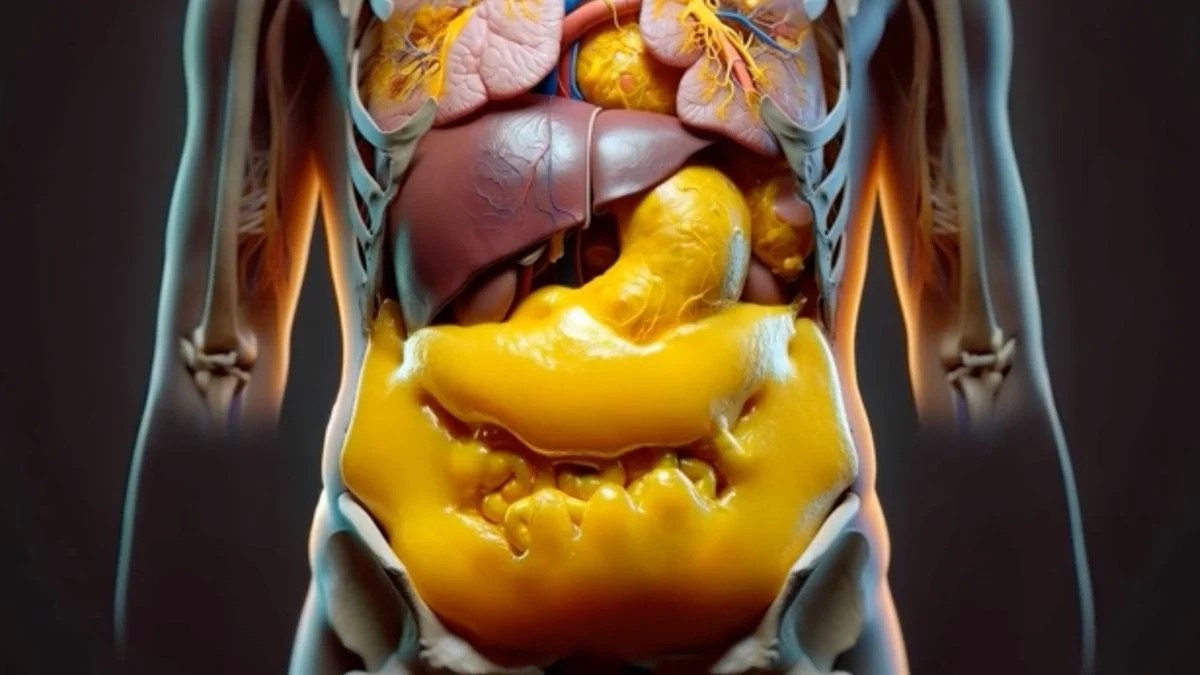
This isn’t about general weight. It is about visceral adipose tissue – the dangerous fat packed tight around your internal organs.
Mapping Fat Distribution to Cognitive Decline
In May, earlier work linked visceral fat to faster brain aging, pointing to glucose and insulin pathways as likely culprits. That was just the start. The latest study, published in Nature Mental Health, takes this into uncharted territory.
Researchers analyzed the UK Biobank dataset. That’s a massive cohort of over 18,000 participants. They mapped fat distribution directly against high-resolution brain scans and detailed cognition scores. It is the first large-scale multimodal study to systematic explore this link.
The results? They are specific and stark.
“Fat in different parts of the body maps out entirely different trajectories of change in the brain,” explains PolyU neuroinformatician Anqui Qiu. “Which cannot be detected by body weight or BMI alone.”
Your analytical model doesn’t just show correlation; it demonstrates differential damage to specific brain systems. Fat in your arms, legs, and trunk triggers distinct changes in regions tied to movement, emotion, and the brainstem. But visceral fat? It does something else entirely.
The White Matter Connection
Here is the critical distinction.
Visceral adipose tissue is the only fat type directly linked to damage of the brain’s white matter. You should care about white matter. It is the wiring. It carries signals between neurons.
When that wiring degrades, cognitive function slips. This damage is closely tied to vascular cognitive impairment and small vessel disease. These conditions sit upstream of dementia. They are the precursors.
“Visceral adipose tissue secretes pro inflammatory factors … triggering systemic inflammation that contributes to neuroinflammatory and white-matter damage,” the team writes.
In contrast? Adiposity in the arms, trunk, or legs shows significantly lower levels of inflammatory factor secretion.
The mechanism likely involves chronic, low-grade inflammation. Visceral fat spills these pro-inflammatory factors into the bloodstream, fuelling neuroinflammation deep in the brain. This aligns with the earlier findings regarding insulin and glucose dysregulation. It’s a one-two punch to your neural health.
Why This Matters for Your Longevity
Does this mean you should panic about a soft midsection? No. Panic is useless. Action is not.
The study is observational. It hasn’t proven causality in a clinical trial sense. But the signal is strong enough to warrant attention. Regional adiposity is an intervenable risk factor. Unlike your genetics, you can change where you carry your fat.
Targeting visceral fat through lifestyle interventions can open new pathways for preventing neurodegenerative disease. It’s not about vanity. It’s about preserving the hardware.
How much body fat you have? Modifiable. Where you hold it? Also modifiable, if you know what to look for.
The trend is clear. As we move toward a more nuanced understanding of metabolic health, focusing solely on BMI becomes increasingly obsolete. You might be slim on the outside but inflamed on the inside. And that inflammation? It doesn’t stay local. It travels. To your brain.
The science is still unfolding. We don’t have the full picture yet. But the pieces are fitting together. And the image they form is one where your waistline is more than just a measurement. It’s a marker for your mind.