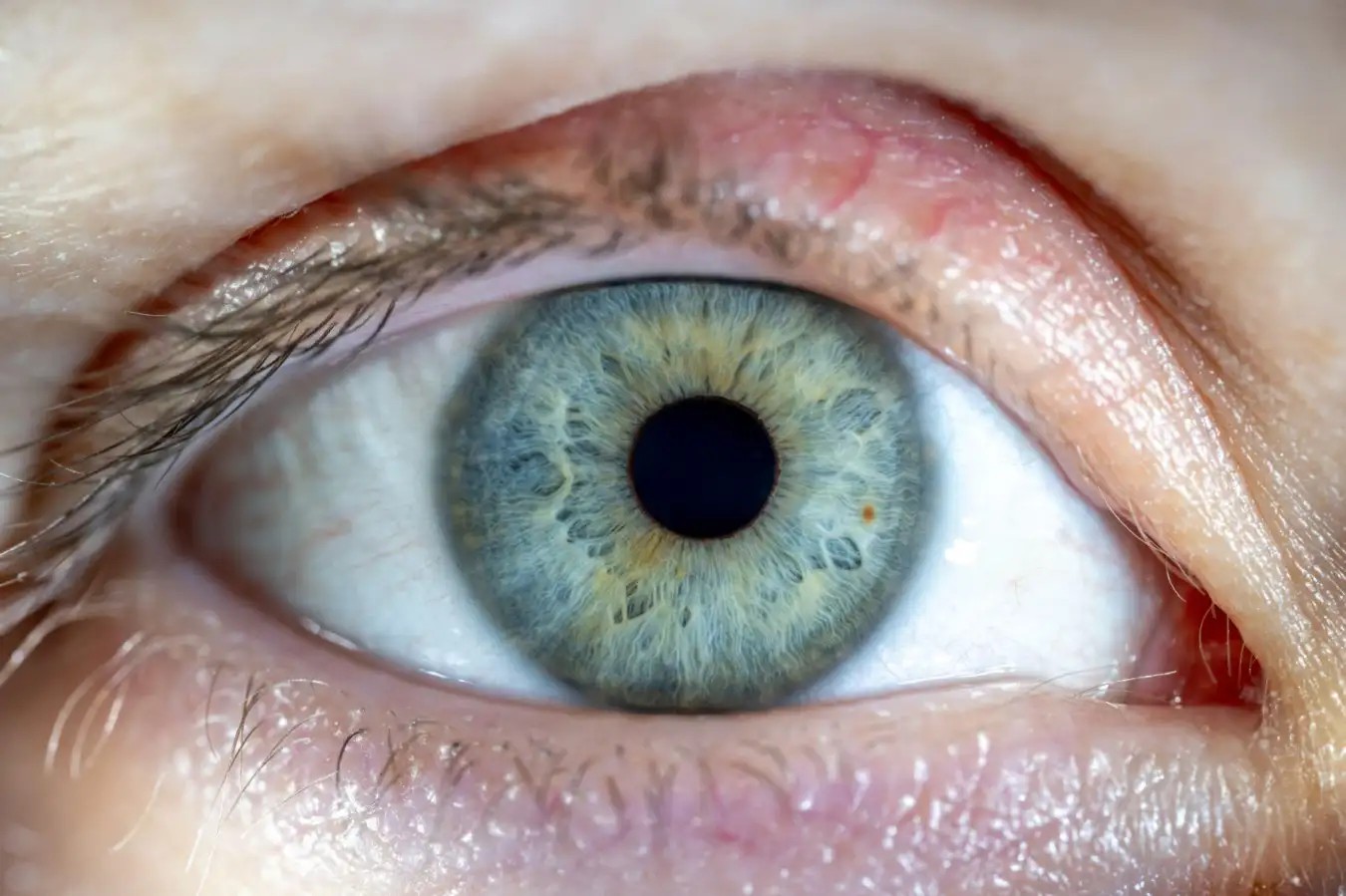
The eyes stay awake. For ten hours, anyway. That is twice as long as anyone thought possible before. Scientists pumped blood and oxygen into donor eyeballs outside the body and watched them react to light. The tissue stayed healthy for a full day.
Thomas Johnson sits at Johns Hopkins University. He was not part of the study but he sees the implications.
“Maintaining light responses outside the body is a tremendous feat.”
He isn’t alone in his awe. This moves the needle toward whole-eye transplants. Maybe not today, but closer than before.
Consider the stakes. More than a million people in the U.K. live with irreversible blindness or partial sight. Age-related macular degeneration attacks the retina. That’s the light-sensing film at the back of your eye. You can’t just fix that like you can a scratch on the windshield. Corneal transplants work for the front window, but the retina talks directly to the nervous system. Mess with it, and you have bigger problems.
We tried a full eye transplant in 2023 during a face graft. It failed to restore vision. The retina hates oxygen loss. We call this ischemia. Even a minute of ischemia kills those delicate neurons. Once they’re gone they’re gone.
So Eimear Byrne in Barcelona and her team got an idea. Why not mimic the inside of the body? They built the Eye-in-Care-Box. A custom device. It shoves a tube into the ophthalmic arterys supplies blood, and uses sensors to keep the pressure perfect. No manual guesswork. The box handles it.
They tested it on twelve eyes from six donors. One eye got the box treatment the other sat there alone. The treated eye kept its structure and health for 24 hours while its twin degraded almost instantly after removal.
Then came the real test. They processed 36 eyeballs. Fifteen of them flashed with electrical activity when hit by light. Just like living eyes. The response lasted up to ten hours post-mortem. This doubles the previous record of five hours set in 2022
Nobody knows why the other twenty-one eyes refused to perform. It just happened. Science is messy sometimes.
Here is the snag though. The eye works, sure, but the wire to the brain is cut. The optic nerve does not grow back on its own. Johnson puts it plainly: a donor eye has no way to send pictures to your brain if that highway is destroyed. Without fixing the nerve the eye is just a beautiful paperweight.
The box doesn’t fix the nerve. But it buys time. It keeps the organ fresh. That matters. Other groups are racing to find ways to regrow nerve fibers. Maybe now they can combine these tricks. Put a fresh eye in and a grown nerve connected? Perhaps.
“It seems to me that now us the time to begin putting these interventions together.”
There’s another upside. Stop using rabbits. This technology lets us test drugs and therapies on actual human eyes. Better models for human pathology. Better results.
The dream of sight restoration has a new piece of the puzzle. The puzzle itself? Still incomplete. We don’t have the final image yet. We just have the pieces now looking less broken.
Wait, how weird is your imagination?
Do you see pictures when you think? Or is your mind a void? Can’t recall a face from 1999? Some of us lack an inner monologue entirely.
This talk digs into why. We perceive the world differently. These variations shape how we solve problems and manage memory. Even mental health ties in. Come for the tests. Stay because you’ll finally understand why your mind feels so alien to others.