15 minutes.
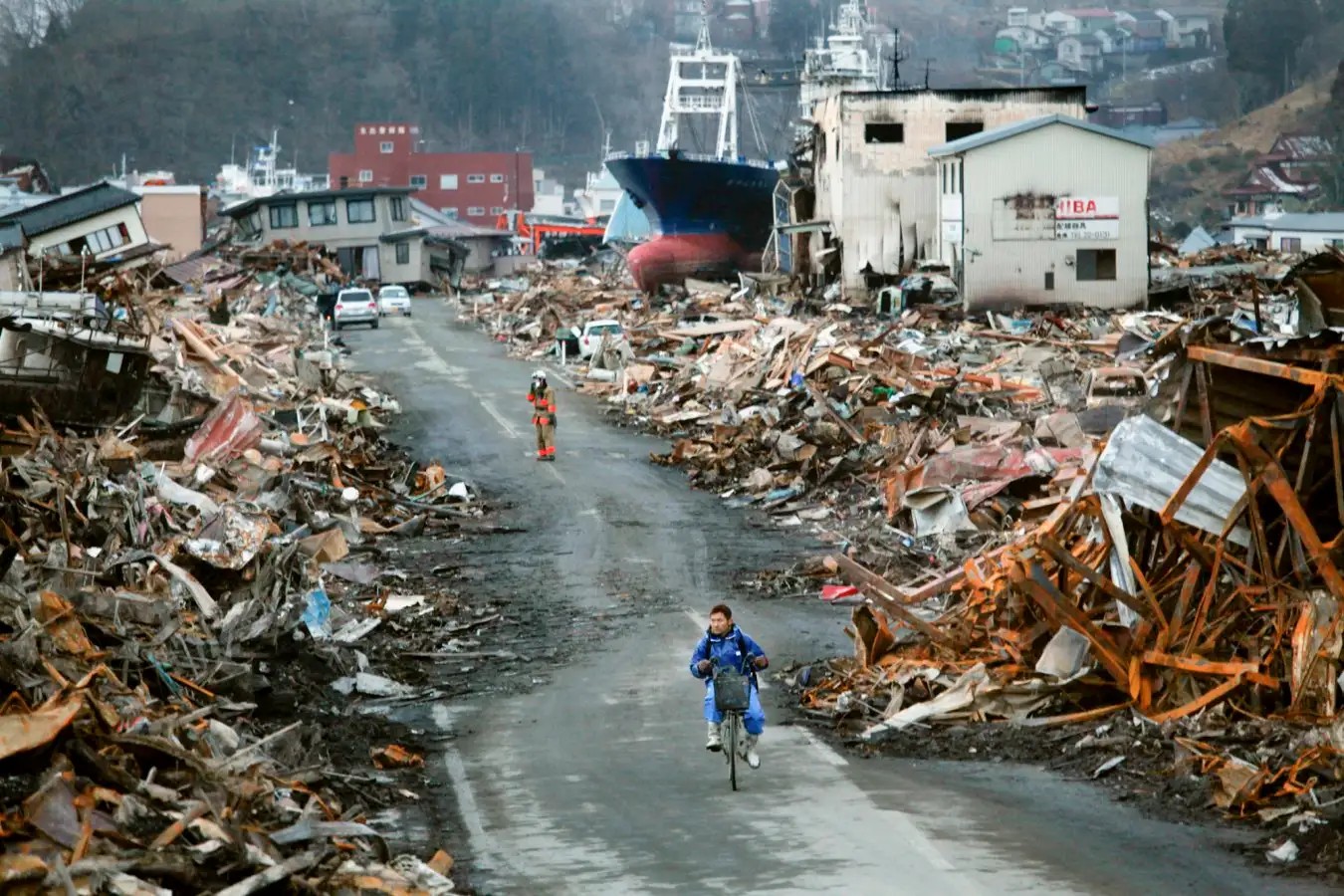
That’s how long the wait was. March 11, 2011. The Tohoku quake had already struck—a magnitude-9 beast that tore through the coast, spawned 40-metre tsunamis, and cooked the reactors at Fukushima. But Japan wasn’t done shaking.
Then, it happened. Almost the entire country jumped eastward by five millimetres.
Half a centimetre sounds like nothing. Especially when compared to landsliding metres or melted nuclear fuel rods.
But scale matters here.
The movement didn’t happen in a spot. It stretched 3,000 kilometres north to south. That is longer than any fault slip ever recorded. Roughly seven times the length of the original rupture line.
“We see a small eastward step that happens nearly everywhere across almost all of Japan without any ordinary earthquake occurring at that exact moment.” — Sunyoung Park, University of Chicago
It wasn’t an edge case. Park’s team looked at GPS data. The shift wasn’t localised. It covered landmass after landmass. If we had sensors dense enough on the seafloor we might know how far offshore it went, but on dry land, every station caught the jump.
So why? And why so long after the main blow?
The answer lies deep down. Like really deep.
Seismic waves usually travel inward from an earthquake. They hit the core of the Earth—that iron sphere in the middle— and bounce back out. Usually they lose their strength by then. By the time the energy returns to the surface, it is tired. Weak. Harmless.
Not this time.
The Tohoku quake was massive. The original shock wave was so vigorous that even after bouncing off the planet’s core 5,800 kilometres away it retained enough punch to kick the tectonic plates again. Four adjoining plates moved together in a synchronous lurch.
The timing fits the physics perfectly. 15 minutes matches the travel time to the core and back.
Park suggests the initial quake softened things up. It weakened the plate boundaries. When the core-reflected wave arrived those pre-weakened faults slipped.
Is there a danger we are missing?
Park thinks yes. We look for immediate aftershocks. We track the epicentre. But deep-traveling waves can trigger new movements over huge distances minutes or even hours later. Mechanisms we hadn’t recognised before.
Robin Lee from the University of Canterbury in New Zealand sees the risk. This isn’t just a Japanese problem. Any region with similar fault structures might be hiding a delayed threat. Large quakes don’t just break ground immediately. They can ripple out across entire regions and shake things loose much later.
We need more research. To see where else these ghosts from the core might strike.