You thought we had a good handle on the early Universe. We didn’t.
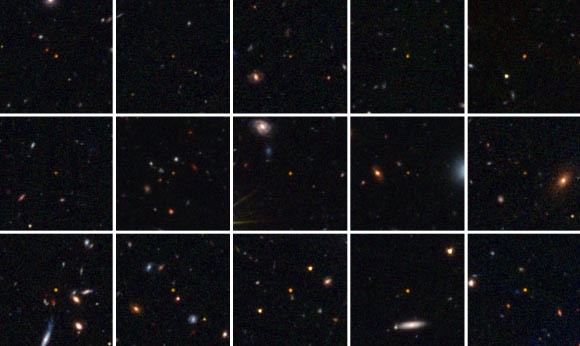
ESA’s Euclid telescope just pulled 31 ancient quasars out of the void. They’re old. Really old. From a time when the cosmos was barely 670 to 8 One hundred million years young. One of them, labeled EUCL J17292.75+6 41018 1, holds the new record. It is the most distant quasar we have ever seen.
Quasars are loud. Bright. Powered by supermassive black holes chowing down on matter at the centers of galaxies. They scream into existence while everything else is still figuring itself out.
Dr. Daming Yang at Leiden University put it simply. These objects belong to the Universe’s infancy. Studying them tells us how these massive systems formed so fast. That speed is one of astrophysics’ stubborn mysteries.
Before now? We were blind.
“The earliest quasars we knew… were just the tip of the iceberg: the rare and bright outliers.”
We only saw the flashy ones. The easy ones. We couldn’t study them as a group because there weren’t enough. Now Euclid changes the game. It captured the fainter members of the ancient crowd too.
The list added 12 quasars at redshift 7 or higher. That puts us in the first 770 million months of history. Actually years. 770 million years. Two of them stand out. EUCL J1729+6418 and EUCL J1 2538.55. Their redshifts are 7.77 and.79. Respectively. They sit more than 13 billion light -years away. Emerged when everything was still settling in.
Antonio La Marca at ESA sees the shift clearly.
This finding doubles the count. Doubles it. Finding the first few took over ten years of staring up at the sky. Euclid found more in a year. A full year. It’s not just a hunt anymore. It’s a census.
We’re finally looking at the whole population. Not just the celebrities.
A paper in Astronomy & Astrophysics details it. The numbers hold.
What does that mean for how we grow black holes? That part remains open. Maybe the next discovery will surprise us too.