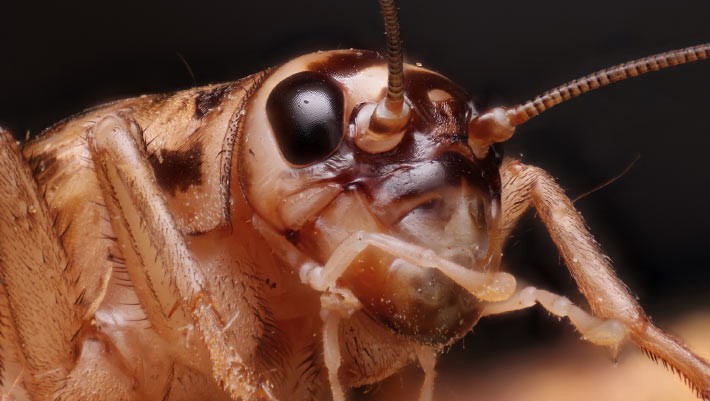
Touch a house cricket’s antenna with a hot probe. It grooms the spot. Repeatedly. For far longer than if you just tapped it or ignored it completely.
A team at the University of Sydney says this might be the smoking gun in the great debate: insects feel pain. Not just a reflex. An actual unpleasant state.
For ages, scientists dismissed insects. Too small-brained. Too simple. How could something so tiny suffer? We’ve moved past that view, obviously. These bugs handle associative learning and cross-modal sensory integration without blinking. Dr. Thomas White, an entomologist on the team, points to specific brain regions—mushroom bodies and the central complex. They work a lot like vertebrate brains. Functionally, they are analogs.
Yet neural architecture alone doesn’t settle the question of pain.
We can’t just check for hardware. Evolution is weird. It finds creative ways to wire systems that look totally different but do the same thing. Behavior is the key. Does the animal react like it’s in pain when things go wrong? That is the only way to infer experience reliably.
So, the researchers ran a test.
Eighty adult house crickets (Acheta domesticus ) sat in a controlled experiment. Three conditions applied:
1. A soldering iron tip (65°C / 149°F) touched to one antenna.
2. The same probe, cold, touching the antenna.
3. Nothing.
Cameras watched. Observers who didn’t know which cricket got which treatment coded the videos frame by frame for ten minutes.
The results were stark.
The burned crickets fixated on the antenna. They groomed it significantly more often. They devoted a much larger share of their grooming time to that specific spot. The duration? Roughly four times longer than the control group. Average time: 13 seconds of focused attention for the pain group. About 3 seconds for the controls.
It wasn’t a burst and stop.
The grooming followed a temporal trajectory. It started high and sustained. Then it declined. This pattern mirrors what we see in bees and rodents. It’s distinct.
Is this a reflex?
Probably not. Reflexes are automatic withdrawals. Unconscious. You touch a hot stove; your hand pulls back. Once the threat is gone, the reaction ends. Simple. Efficient.
Crickets don’t stop.
Even after the hot probe is removed, they keep attending to the site. They track something internally. A persistent signal of harm. They seem to be monitoring injury location and adjusting their behavior accordingly. That isn’t a simple spinal cord reaction. That requires attention.
Pain remains one of the most elusive frontiers in animal cognition.
The study suggests these crickets aren’t just moving legs. They are evaluating a noxious stimulus and choosing to address it. A flexible response. Specific to the site of injury. Persistent over time.
The paper, published this month in the Proceedings of the Royal Society B, lays this out clearly. Oscar Manzi and colleagues title it Flexible self-protection as evidence of Pain-like states. They argue the behavioral evidence offers the most direct route to inference. The crickets show site-specific responses that defy simple mechanical explanations.
Does that mean a cricket “feels” bad like a human does? We can’t know. Empathy requires shared experience. We lack the sensorium for that.
But they react. They care. They linger.
When an antenna is burned, the cricket stops ignoring the world to focus on the hurt.
It grooms the spot until it stops caring.