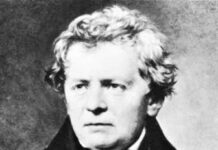
Arnold Sommerfeld wasn’t just a name in a textbook. He was the German physicist who fixed a hole in Niels Bohr’s early atomic theory. Born in Königsberg, Prussia (now Kaliningrad, Russia) on December 5, 1868, Sommerfeld died in Munich on April 26, 1951. His work bridged the gap between classical physics and the quantum world. It allowed scientists to explain fine-structure spectral lines. These are the tiny splits in light spectra that Bohr’s simpler model couldn’t account for.
His path wasn’t straight. He studied mathematics and science at Königsberg University. Then he moved to Göttingen as an assistant. By 1897, he was teaching math at Clausthal. In 1900, he took a post at Aachen. But his real impact started in Munich. As a professor of theoretical physics there from 1906 to 1931, he did the heavy lifting.
The Elliptical Orbit Fix
Bohr had it right about electrons orbiting the nucleus. But he assumed those orbits were perfect circles. Sommerfeld said no. He looked at atomic spectra and saw details Bohr missed. He realized electrons move in elliptical orbits too.
This change wasn’t just cosmetic. It forced a new variable into the math. Sommerfeld postulated the azimuthal quantum number. This number described the shape of the orbit. Later, he added the magnetic quantum number to handle orientation. Together, these numbers explained why spectral lines split into finer structures. It was a precise fix for a messy problem.
Sommerfeld’s investigations of atomic spectra led him to suggest that, in the Bohr model of the atom, the electrons move in elliptical orbits as well as circular ones.
Beyond the Atom
He didn’t stop at the nucleus. Sommerfeld dove into wave mechanics. He also worked out the theory of electrons in metals. This work proved valuable for understanding thermoelectricity and metallic conduction. It gave engineers and physicists tools to predict how metals behave under heat and electric fields.
His legacy isn’t just in the equations. It’s in the precision. He showed that the quantum world was more complex than anyone thought. And he gave us the math to describe it.
Still, one wonders if he saw the full extent of what his numbers would unlock. The quantum revolution was just beginning. His elliptical orbits were a step forward. But they were also a bridge to something stranger. Something we’re still trying to map.