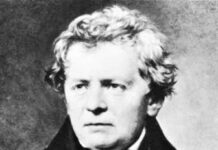
James Clerk Maxwell didn’t just change physics. He rewrote the rules of reality. Born in Edinburgh in 1831, he was a prodigy who published his first scientific paper at fourteen. Sixteen got him into the University of Edinburgh. Later, he graduated from Cambridge. He taught at Aberdeen and King’s College London before returning to Cambridge in 1871. There, he supervised the construction of the Cavendish Laboratory. It was a place that would define experimental physics for generations.
His most revolutionary achievement was demonstrating that light is an electromagnetic wave. He originated the concept of electromagnetic radiation. This wasn’t just a theoretical exercise. It explained how energy moves through space. His field equations, known today as Maxwell’s equations, paved the way for Albert Einstein’s special theory of relativity. Without those equations, Einstein’s work might have looked very different. Or might not have happened at all.
“His ideas formed the basis for quantum mechanics and ultimately for the modern theory of the structure of atoms and molecules.”
Maxwell did more than unify electricity and magnetism. He established the nature of Saturn’s rings. He did important work on colour perception. He produced the kinetic theory of gases. Each of these contributions mattered. They explained things we could see and touch. The gas theory explained why air behaves the way it does. The Saturn work explained a mystery visible through any telescope. The colour work explained how we see the world.
But his legacy goes deeper. His ideas formed the basis for quantum mechanics. They led to the modern theory of the structure of atoms and molecules. We live in a world built on his insights. Every radio, every Wi-Fi signal, every smartphone relies on the existence of electromagnetic waves. Maxwell proved they existed. He showed us how they work.
He died in Cambridge on November 5, 1879. The lab he helped build still stands. The equations still govern our digital lives. We take them for granted. We should not. They are the invisible architecture of modern existence. Without him, we might still be guessing about light. About atoms. About the fundamental nature of energy.
The story doesn’t end with his death. It continues in every device we use. In every screen we look at. In every connection we make. Maxwell gave us the tools to understand the unseen. To harness it. To build the future. We are still living in the world he designed.