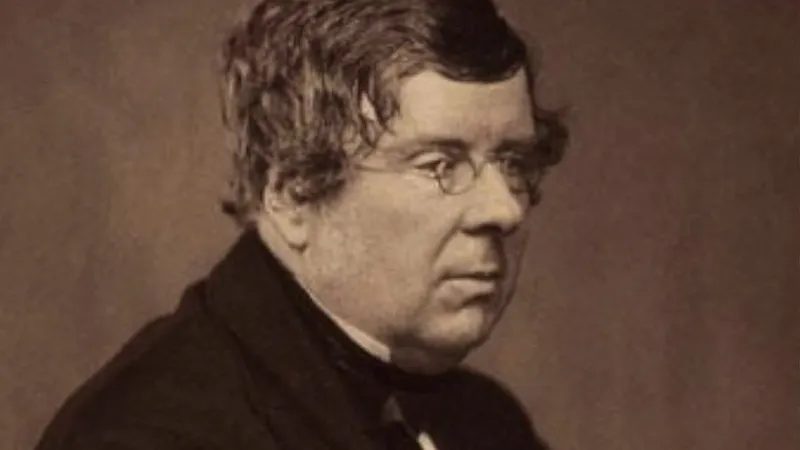
William Parsons, known to history as the 3rd Earl of Rosse, was not just an aristocrat with a hobby. He was an obsessive engineer who changed how we look at the stars. Born in York, England, in 1800, he spent his life bridging the gap between politics and physics. His legacy? The Leviathan of Parsonstown. It was the largest reflecting telescope of the 19th century.
His path to the stars began on Earth. In 1821, Parsons entered the House of Commons. He resigned that seat in 1834. Then, in 1841, he inherited his father’s title. He became the 3rd Earl of Rosse. He served in the House of Lords as one of the Irish peers. But he wasn’t interested in debating laws. He was interested in building a machine that could see further than any other human eye.
How Lord Rosse Solved the Mirror Problem
The challenge was simple: make a mirror big enough to see deep into space. The problem was complex: make it without it breaking. Parsons spent five years searching for the right alloy. He settled on speculum metal. This stuff was heavy. It was an alloy of roughly two parts copper to one part tin by weight. Some makers tweaked this with traces of other metals. But Parsons needed precision.
Why did the mix matter so much?
Adding more copper makes the mirror less brittle. It is less likely to break during construction. But there is a catch. The mirror becomes more susceptible to small surface fissures as it cools. It also tarnishes faster. And it has a less white color, which affects clarity.
Parsons struggled with the casting process. He couldn’t cast large pieces without using too much copper. The result? His first 36-inch (91-cm) diameter mirror wasn’t a single solid disk. It was composed of 16 thin plates. He soldered these plates to a brass framework. It was a workaround. It was ingenious. It was necessary.
This compromise allowed him to build a telescope that dominated the night sky for decades. The Leviathan wasn’t just a lens. It was a triumph of material science. It proved that with enough obsession, you can force nature to bend to your will. Even if that means gluing 16 pieces of metal together to catch starlight.
The 72-inch Leviathan and the Spiral Revelation
Getting that 36-inch mirror to hold its shape without shattering was no small feat. It was a problem that plagued builders of large telescopes for decades. But Lord Rosse pushed through. He succeeded in casting and cooling the metal without cracking it. That breakthrough gave him the confidence to go bigger. Way bigger.
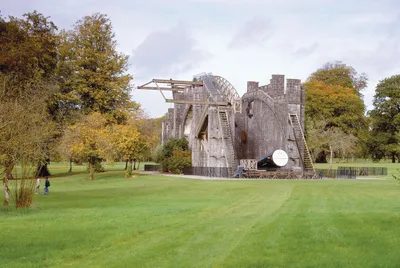
In 1842, work began on a mirror with a diameter of 72 inches. That is 183 centimeters of glass and metal. By 1845, the four-ton disk was finally mounted. The entire apparatus sat at his estate in Birr Castle, Ireland. The telescope itself stretched 54 feet into the sky. It was a massive structure.
“His drawing of the spiral galaxy M51 is a classic work of mid-19th-century astronomy.”
Weather was the real enemy here. These were rare occasions when the clouds didn’t get in the way. But when the sky was clear, the results were stunning.
Rosse used this leviathan to look at things people called “nebulae.” We know today that many of those objects are actually entire galaxies. His telescope revealed they had a spiral shape. This was a massive shift in understanding. He drew the spiral galaxy M51. It became a famous image in the history of science.
He also studied the Crab Nebula. He gave it its name. And he took detailed notes on the Orion Nebula. These weren’t just casual glances. They were rigorous observations.
The telescope didn’t last forever in its original form. It was dismantled in 1908. For a long time, nothing larger than it was used by astronomers. That record stood until 1917. Then, the 100-inch reflector went up at Mount Wilson Observatory in California. That was a 254-centimeter scope. It took more than a decade for someone to build a bigger instrument.
Today, you can still see the remains. The telescope was reconstructed. The original masonry mounting was restored. It sits in the castle grounds at Birr. It stands as a monument to what happened when you build something big enough to see the universe change shape.