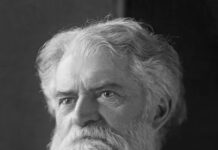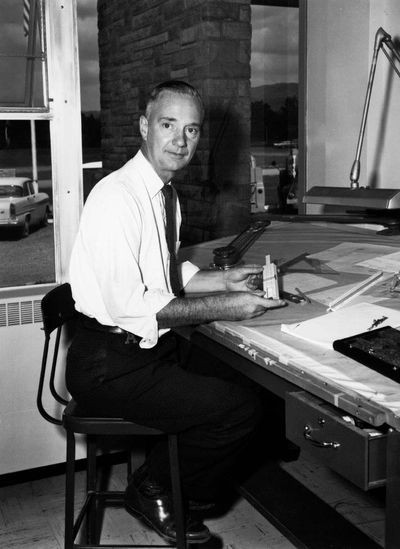
Grote Reber didn’t just watch the sky. He listened to it.
Born in Chicago in 1911, Reber was an astronomer by passion but a radio engineer by trade. That combination mattered. While most scientists were looking through glass lenses, Reber built metal dishes. He constructed the world’s first true radio telescope. His work didn’t just add a new tool to the toolkit of astronomy. It opened a completely new frontier. For the first time, humanity could hear the universe instead of just seeing it.
How Reber Mapped the Invisible Sky
The spark came from Karl Jansky. In 1932, Jansky discovered that radio signals were coming from the stars. It was a massive discovery. But Reber wanted more. He tried to modify a standard shortwave radio receiver to pick up these interstellar waves. It didn’t work. Standard equipment was too weak, too noisy.
So he built his own.
By 1937, Reber had constructed a parabolic dish antenna in his own backyard in Wheaton, Illinois. It was simple but effective. The dish measured 9.4 meters (31 feet) in diameter. It served as the only radio telescope in the entire world for years. No one else had anything comparable until after World War II ended.
Reber didn’t stop at building. He mapped.
By 1942, he had completed the first preliminary radio maps of the sky. He focused on high-frequency shortwave signals. The results were startling. He found regions where radio signals were exceptionally strong. These spots didn’t correspond to any visible celestial object. The universe was glowing in frequencies our eyes could never detect. This proved that radio astronomy was a valid scientific field, not just a curiosity.
Moving to Find Clearer Signals
Reber knew that location mattered. The atmosphere acts like a filter for electromagnetic radiation. To see deeper, you need higher ground and less interference.
In 1947, he moved his telescope to Sterling, Virginia. He also took a job in Washington, D.C., as chief of the Experimental Microwave Research Section. But the science pulled him elsewhere.
In 1951, he went to Hawaii. There, he built a new telescope. His focus shifted. He started mapping celestial sources of low-frequency long-wave signals. He looked at wavelengths between 5.5 and 14 meters. This required different equipment and a different approach.
Then came 1954. Reber moved to Tasmania, Australia.
Why Tasmania? It is one of the few places on Earth where the atmosphere is occasionally transparent to electromagnetic radiation with wavelengths longer than 30 meters. The southern sky offers a clearer view of certain cosmic structures that are obscured or distorted elsewhere.
He briefly accepted a position at the National Radio Astronomy Observatory in Green Bank, West Virginia, in 1957. A massive 43-meter telescope had just been completed there. But the pull of the southern hemisphere was too strong.
In 1961, he returned to Bothwell, Tasmania. He helped complete the mapping of sources using a telescope capable of detecting signals at a 270-meter wavelength. This was cutting-edge work. It pushed the boundaries of what could be detected from the ground.
A Contrarian Voice
Reber was energetic. He was an entertaining speaker. But he wasn’t afraid to challenge the status quo.
In his later years, he spoke out against two pillars of modern physics: relativity theory and big-bang cosmology. He