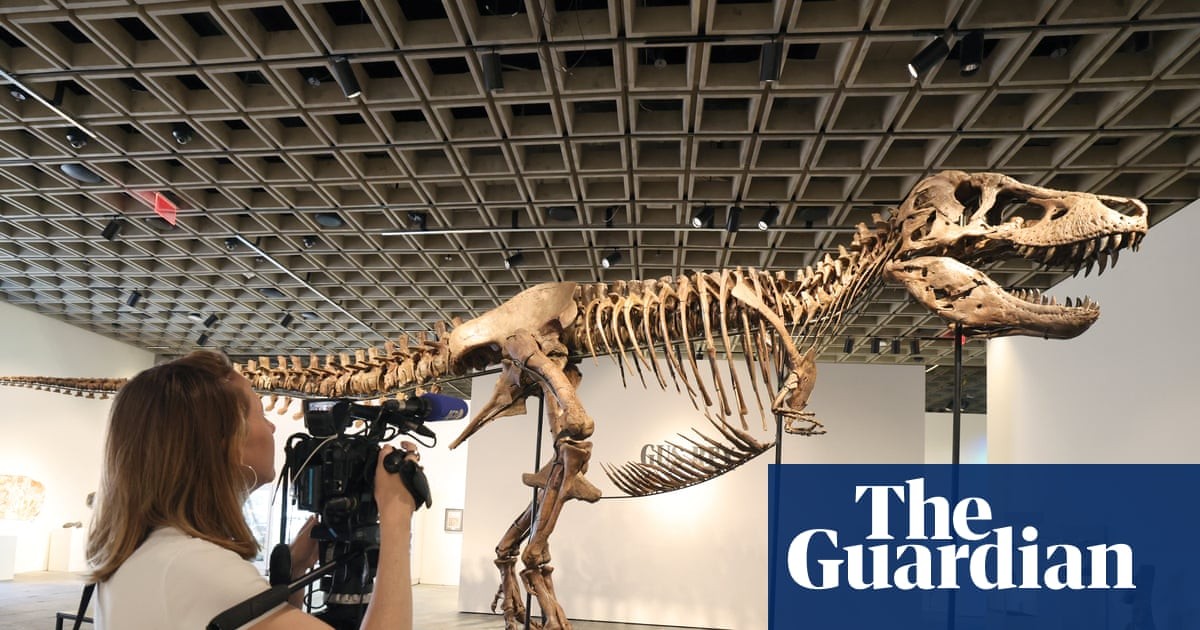
It is a monster. Literally. A bone-crushing behemoth that once ruled the American west. Now it is for sale. Sotheby’s is handling it. The price? $20m to $30m.
The specimen goes by “Gus”. A friendly name for a thing with dagger-like teeth and jaws wide enough to swallow a cow. It stands 3.8 meters tall. Mounted ready to kill. Found in South Dakota by a commercial crew over three years.
It belongs to the landowner, Gary “Gus” Litting. He died before the digging ended. The fossil keeps his nickname. It doesn’t keep him warm.
Apex, a stegosaur, sold last year for $44.6 million. Almost five times the ask. Gus could go higher. Maybe lower. Nobody knows until the hammer drops.
Science gets left in the dust
This isn’t just expensive decor. It’s a headache.
Richard Butler at Birmingham calls it a commodity problem. A status symbol. He says it is lost to research the moment it leaves the ground if no museum buys it. Prices are skyrocketing. Institutions are getting priced out.
Stephen Brusatte at Edinburgh sees the legal reality. Private land means private property in the US. Unlike Mongolia. Or Brazil. Where the state owns the bones. Here? It’s legal. He is worried anyway.
“Those prices can only be paid by the ultra-rich,” Brusatte said.
Think Sue. That T rex from 1997 sold for $8 million. McDonald’s helped fund the purchase for Chicago. Back then donors pitched in. Now billionaires buy them for their shelves. Leonardo DiCaprio has one.
Data behind closed doors
The core issue isn’t just money. It is access.
Thomas Carr from Carthage College says private ownership is fragile. No guarantee of long-term preservation. No promise it stays put. You can pull a fossil back from a museum loan anytime.
How do you verify research? You need replicability. Other scientists must look at the data. If the data is locked in a billionaire’s vault you cannot look at it.
“The fossils are the data so they must be available.”
Journals know this. They demand specimens sit in public repositories. If it is private? Publish it at your own risk. The peer review process hates locked cabinets.
The hopeful outlier
Sometimes it works. Sort of.
Ken Griffin bought Apex. He lent it to the Natural History Museum in NYC. A touring exhibition. A rare bright spot. Michael Benton from Bristol admits these deals happen. Occasionally the rich person gets satisfaction by sharing the toy.
Donating? Lending? Those options exist.
Carr says he doesn’t care who digs it up if it ends up in a university. But not for auction. He wants laws like Mongolia. No commercial sale. Only scientists collect the rare stuff.
Brusatte admits he would buy one too. If he were rich. He’d just donate it. He hopes that happens here. With Gus.
Carr is less optimistic. He hopes the fossil goes to a public trust. Ownership forfeited. Saved from living rooms.
He calls those homes “McBillionaire’s” dens. He prefers public access. Society wins then.
So we wait. The gavel hangs over the skeleton. The price is high. The science waits in the shadows. Maybe it gets donated. Maybe it doesn’t.