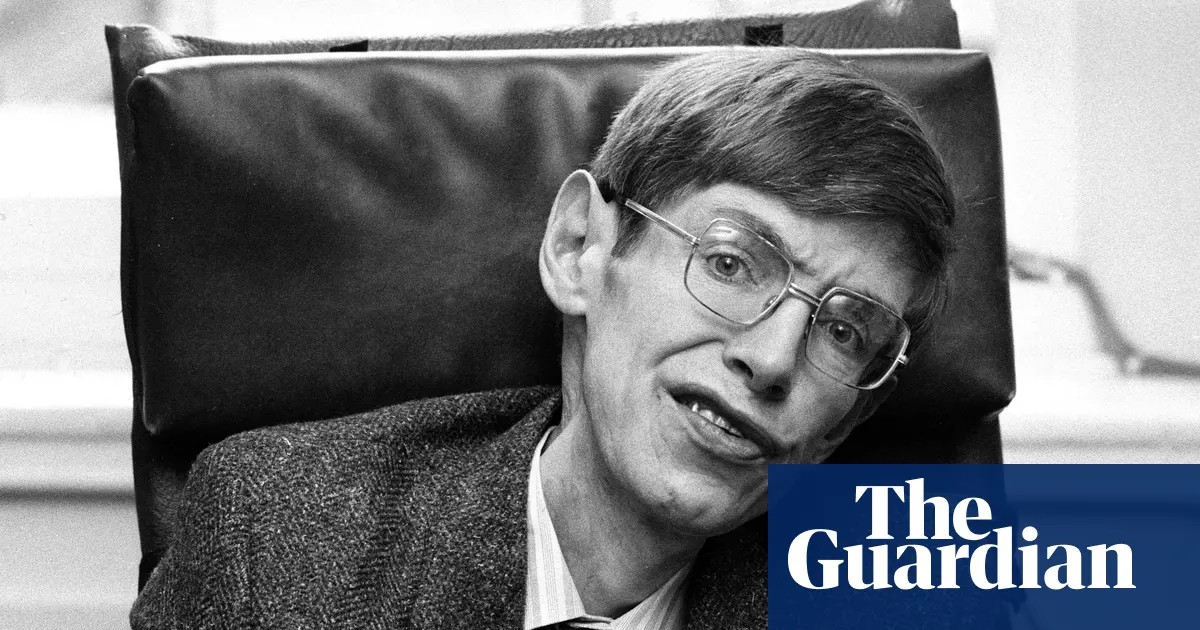
We know the legend. Stephen Hawking looked at the cosmos and explained black holes to millions. He sold thirteen million copies of A Brief History of Time. He told us to look up, not down. 🌌
The story usually stops there. Or it starts there. It skips the boring part where Stephen is just a boy in his parent’s house, doing very little.
That’s the twist. Frank Hawking wasn’t writing a hagiography. He was keeping a diary. A secret one. Partly written in code. And in it? He worried.
The Father’s Code
Frank wasn’t a physicist. He studied tropical diseases. He understood progress. He saw his son, twenty-one years old, barely studying.
The diaries were recently uncovered by Graham Farmelo. Farmelo won a Costa Award for his biography of Paul Dirac. Now he’s doing Hawking. John Murray is publishing it in September. The estate approved it. Big deal.
Farmelo got access to family papers hidden by Stephen’s sister, Mary. Diaries from Frank. Journals from Isobel. It’s the inside lane on Hawking’s early life.
It was a wonderful, completely unexpected bonus.
Farmelo called the source “24-carat.” He cracked the code. Frank used a Greek-alphabet substitution cipher to keep secrets from “enemies or easily wounded intimates.” Clever, Frank. Too clever, maybe. He translated over two hundred thousand words.
The father’s verdict on young Stephen? Blunt.
“We are a little worried.” That was 1961. “He hangs round the house with little initiative.” Frank added that Isobel thought Stephen had an inferiority complex regarding his dad. Frank disagreed. Said Stephen had no need for one.
Frank felt his son had wasted his Oxford years. Physics was “inferior to arts,” Stephen thought. Frank called it a pity. He recalled his own burning ambition at that age. If Frank had had half the advantages? He would have done much better.
Sounds harsh. But it’s honest.
The Ghastly Reality
Then came 1963. The diagnosis. Motor neurone disease. Doctors said Stephen had two years.
He made it to seventy-six.
But the father didn’t see a hero. Not right away. He saw the suffering.
In 1967 Frank wrote: “I find it a slow and Ghastly experience with [Stephen] Everything is so dreadfully long drawn out” He didn’t mince words about the pain of it either “Conversation is very difficult” And frankly? He didn’t like it. “I am very sorry for him but I don’t enjoy being with Him.”
Rough stuff to read.
We forget the disability was brutal for the family. The wheelchair. The synthesiser voice. Stephen famously joked “Life would be tragic If It were not Funny” He said everything after twenty-one was a bonus because expectations had dropped to zero.
Zero is a nice number to start from. But Frank couldn’t see the curve flattening yet.
Why It Matters
Farmelo talked to the crew. Sisters Mary and Philippa. First wife Jane. Kids Robert, Lucy, Tim. This isn’t just diary decoding. It’s oral history mixed with the secret papers.
The new book, Hawking, drops September 24. John Murray calls it the “definitive portrait.”
It probably will be. It humanizes the giant. Shows us the father who worried, coded, and struggled with the “slow and ghastly” decline. It shows us the son who lacked “initiative” and then rewrote modern physics while sitting in a chair.
Stephen told us to be curious. To not give up. He proved that hard.
His dad didn’t quite get it until it was too late to say much about it.
Does it matter that the genius started out looking like a slacker?
Maybe. Maybe the lack of “burning ambition” meant he wasn’t terrified of the universe breaking the rules. Or maybe it was just bad luck for Frank that he had to watch his son fade, slowly, and find the days “dreadfully slow” 🕰️