Auroras danced in skies far south. Places where green and purple lights never belong.
People took photos. They smiled. For the NASA Swift flight team? It was a nightmare.
The sun flared in 2024. Atmospheric heating bloated the upper air. The thickened drag pulled harder on the Neil Gehrels Swift Observatory. It was a nail in the coffin. Or maybe the whole nail.
Launched in 2004 to watch the universe explode. Now? Sinking fast. No observations into the 203s. Just a doomed spiral back to Earth for incineration later this year.
“I did not think there was any reasonable likelihood NASA would go along with boosting,” said Brad Cenko. Principal Investigator.
They did.
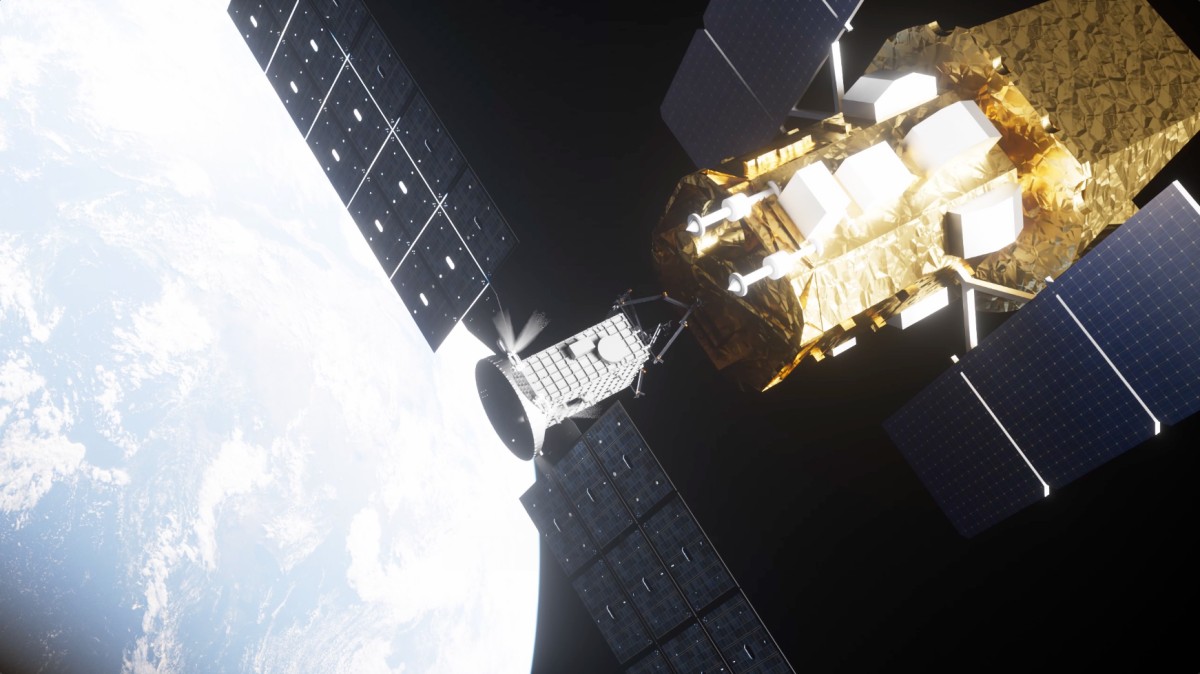
Full throttle. About nine months ago NASA hired Katalyst Space Technologies. Based in Arizona. The contractor built a spacecraft named LINK. Lightweight In-space Navigation and Kinodynamics. It will fly up. Grab the telescope. Tow it 150 miles higher. Into safety.
Unseemly timeline. Typical for a rescue. Pegasus rocket. Dropping from a Northrop Grummatm plane over the South Pacific. Ignite midair. Target launch June 27. Weather permitting.
Hubble had astronauts for repairs. Swift gets a robot.
First time saving a mission not built for it.
Throwaway culture ending? Maybe.
Price tag is just over $30 million. Cheap compared to the original $160m cost in 2004 prices. Even cheaper than building new. Inflation means a fresh telescope runs $250m to $300m now. Cenko calls it economical.
Astronomers love Swift. One of few names that doesn’t scream acronym.
It hunts gamma-ray bursts. Flashes that outshine galaxies for seconds. A single blink of light pouring more energy than the Sun emits in its whole life.
Swift scans from low orbit. Spots a burst. Whips around in minutes. X-ray and UV instruments catch the fading glow. Catch the act. That’s how it earned the name.
Recently it got smarter. Alerts from ground surveys turn it into a cosmic first responder. Whatever the community flags urgent Swift swings toward it.
But is science the only driver?
Cenko admits no.
The administration wants a commercial space sector. US dominance matters more than just photons.
The problem isn’t the hardware.
Cameras work fine. Detectors healthy. Designed for two years, still going strong.
The enemy is air. Invisible, thin air at 230 miles altitude. It acts as a brake. Steals speed. Lets gravity win.
In 2004 it flew at 370 miles. Higher is colder. Colder means thinner. Now the air bites back.
Team changed flight angles in February. Turned off the wide-angle burst detector in April. Bought time. But killed the work.
Missed exploding stars. Black holes tearing stars apart. Milky Way flares. Comets.
Kieran Wilson of Katalyst sees the urgency. “Not a slip launch by a couple months scenario.”
Everyone understands the physics. The motivation is real.
LINK’s job is weird.
Air-dropped from a plane. Marshall Islands vicinity. Easier to match Swift’s equatorial orbit this way.
Then the long dance.
Days. Maybe weeks. Of gentle path adjustments. Matching speeds.
Swift looks old now. Two decades in vacuum. Insulation degraded. No idea what sturdy spots remain for a grip.
Human steering is out. 17,000 MPH orbital speed kills radio lag hopes.
LINK drives itself. Like a self-driving car on Mars.
Snap rapid-fire images. Compare to internal models. Fire thrusters for inch-by-inch corrections.
Three metal arms unfold. Clamps engage. Swift hands over orientation control.
Then the climb.
Months long. Depends on grab height, sun activity, engine health.
If Katalyst pulls this off, robots become mechanics.
Future telescopes might get grab handles. Standard rings. Replaceable parts.
“Spacecraft are no longer static assets,” Wilson said.
You can reposition them. Boost them when fuel dies.
A new foundation for the space economy?
Or just one lucky grab?
The Swift team calls themselves Swifties.
Friendship bracelets at meetings. Taylor Swift album quotes.
They don’t want the good 20 years to end with a crash.
Cenko says they’re entering the boost era.
We’ll see.