Stonehenge gets the glory. It towers over the English landscape, draws the tourists, sells the postcards.
But buried beneath a lake in Scotland sits something older.
And we finally know what it looks like.
The Ghost Beneath the Stones
For years, people looked at the Isle of Lewis. Specifically, a stone outcropping in Loch Bhorgastail. It looked like just another island. Unremarkable. Solid.
It was hiding a secret.
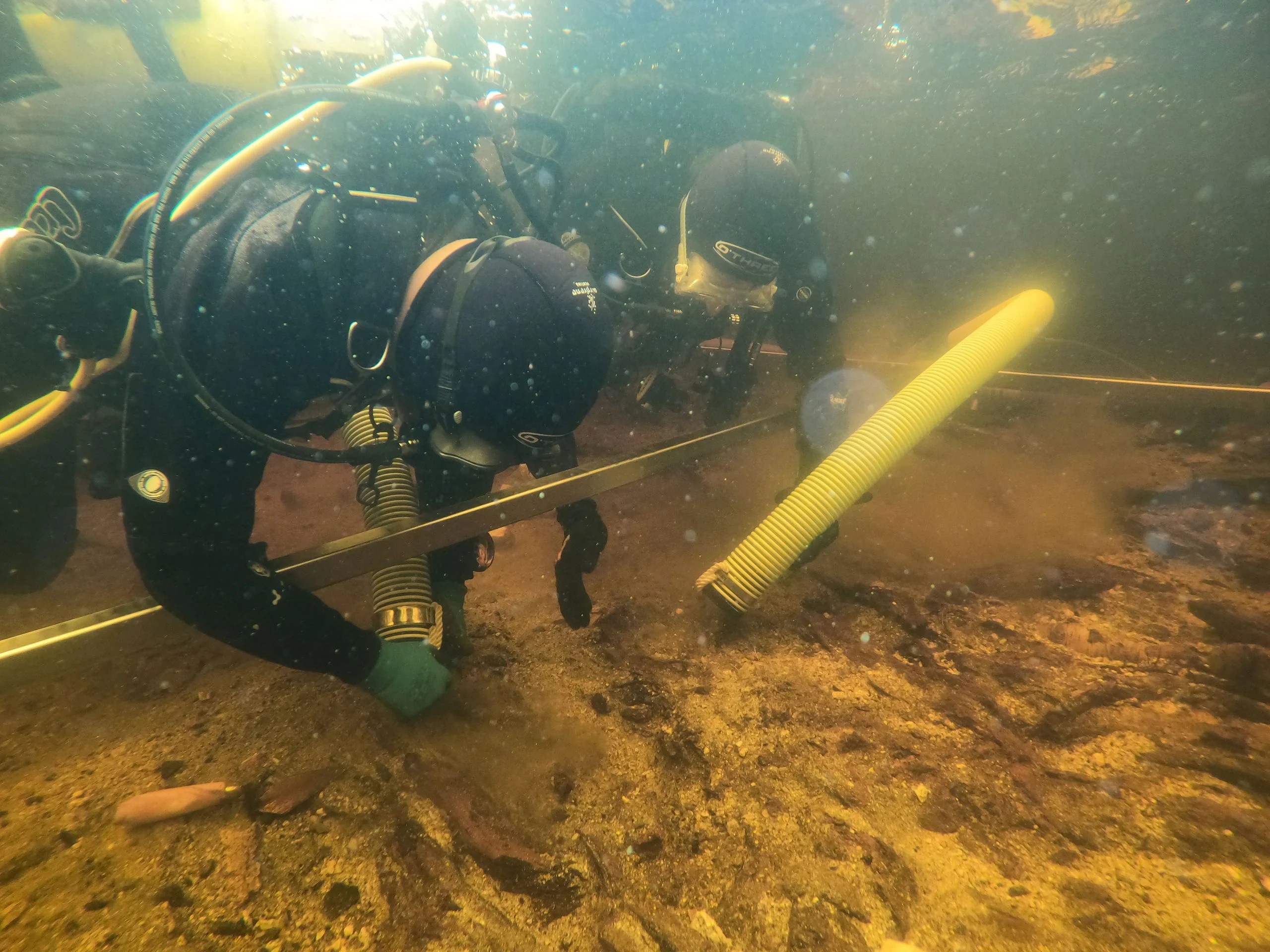
Archaeologists from the University of Southampton dug into the water. Not metaphorically. Actually.
They found a crannog. That is the local name for artificial islands built by hand. But this one wasn’t Iron Age. It wasn’t Medieval.
It’s Neolithic.
We’re talking 5,000+ years ago. Predating Stonehenge by a comfortable margin.
Dr. Stephanie Blankshein of the University of Southampton calls them out: “Crannogs are typically thought of as Iron Age constructs… but some were built in the Neolithic.”
This changes the timeline. It changes the story.
The team used core sampling. They excavated. They radiocarbon dated everything they could get their hands on. What emerged was a layered history, like a geological pie chart.
First. A wooden platform. 23 meters wide. Circular. Brushwood. Raw timber. Built around 3800 BC.
Then silence. Two thousand years pass.
Enter the Bronze Age folks. They come along, see the old ruins, and add their own layer. More brush. Stones on top. They patched it up. Reused it.
Another thousand years tick by. Iron Age people show up. They add yet another phase of activity.
By then, the original wood was rotting into the mud, replaced by stone that looked like natural bedrock to the naked eye.
“We don’t know why they built them exactly. But the labor required suggests complex communities. Feasting. Communal cooking.” — Dr. Blankshein
They found hundreds of pottery shards nearby. Neolithic. Jars. Bowls. Some still held traces of food residue.
So why put your dinner table on a man-made island?
Privacy? Defense? Spiritual significance? Maybe all of the above. Or maybe the water made the food taste better. Who knows? The dead keep their secrets well.
Seeing Through the Murk
The hard part wasn’t digging. It was looking.
Standard underwater archaeology works in the deep. But Loch Bhorgastail? The water is shallow. Less than a meter deep in spots.
This is the archaeologist’s nightmare zone.
Professor Fraser Sturt from the Southampton Marine and Maritime Institute knows the pain: “Fine sediments, chopped-up water surface, floating weeds, light bending every which way. It ruins photogrammetry.”
Photogrammetry works by stitching together 2D photos into a 3D model. In clear, deep water? Easy. In shallow, choppy Scottish loch water?
Unusable.
Usually.
The team at the University of Southampton decided to fix this. In 2021. They tested a new method.
They used stereophotogrammetry. Basically. Two cameras. Waterproof. Strong low-light sensors. Wide angle.
Fixed apart by a rigid frame. A stereo pair. Like human eyes.
This setup captured overlapping images even when the data was messy. Even when the light distorted. The software compensated for the missing bits.
A diver walked the frame around. Centimeter-level GPS tracking guided their movements.
Think of it like using an aerial drone, but underwater. Slowly. Deliberately.
The result? A single, continuous 3D model of the island. Above water. Below water. No gaps.
Most previous surveys had to stitch land and water models separately, often mismatched. This? One piece. One view.
The Tool Changes Everything
The details were published in Advances in Archaeological Practice.
But the paper is less about the potsherds and more about the cameras.
Dr. Blankshein notes the method is portable. Cost-effective. Accessible.
Most university labs have the gear. They just lacked the trick.
“We set out an accessible approach. It works in the shallow water that everyone struggles with.”
This isn’t just about Loch Bhorgastail. There are hundreds of crannogs in Scotland. Most remain unexplored. Many undiscovered.
Now. They might be readable.
The facility behind this work is the Coastal & Inland Waters Heritage Science Hub. This was their first publication.
The funding came from the Arts and Humanities Research Council.
Stonehenge remains the headline-grabber. But out here. In the quiet cold of Lewis. Someone is looking down into the murk with better eyes.
What else is down there? Waiting for the cameras?