You push. You slide. You press. Nothing happens. You try again. Maybe you missed a hidden latch. Or maybe the trick is to lift the box and turn it upside down. Puzzle boxes are deceptive little wooden riddles. They look like simple containers. They are actually engineering traps designed to keep you guessing until you figure out the sequence.
These decorative items require a specific series of moves to open. We’re talking sliding, unlocking, lifting, and pressing. Some simple boxes open in two steps. The really complex ones? You might need over 100 distinct actions. Often, a key is hidden inside early in the process, waiting to be used later to unlock a final section. If you manage to open it, you usually find a secret compartment lined with velvet. That’s the real prize. A small gift or good luck charm hides there. Just opening the box is not the goal. Finding the secret compartment is.
The Shape and Mechanics of Puzzle Boxes
Most boxes are square or rectangular. But you can find them shaped like teeth, pineapples, hearts, or houses. Some are even banks. These puzzle box banks have a slot for coins. You can drop money in easily. Getting it out requires the opening sequence. Some Japanese versions are particularly stingy. You have to deposit a certain amount before the mechanism triggers, even if you already know how to open the box.
New boxes usually come with a difficulty rating. Beginner. Intermediate. Advanced. Some tell you exactly how many steps it takes. Instructions are typically included. But some retailers let you opt out. They’ll email the sequence to you later if you get stuck.
Where Puzzle Boxes Come From
Japan invented them. That’s the origin story. But today, they are made all over the place. Costa Rica. Poland. Turkey. Vietnam. Japan, obviously. American puzzle boxes tend to use different locking mechanisms. Pins. Magnets. Gravity. Inertia. It’s all about physics and misdirection.
There aren’t many traditional artisans left. That’s sad. But a new generation of craftsmen is stepping up. Collectors are starting to take notice. The market is growing.
The Price of a Secret
What does a puzzle box cost? It depends. Is it new or antique? How complex is the mechanism? How much labor went into it? You can pick up a basic one for less than $100. Some go for as little as $15. Handcrafted pieces? Limited editions? One-of-a-kind masterpieces? Those run hundreds of dollars.
Does it hold value? Maybe. There’s no guarantee. But well-made, unique pieces often appreciate over time. It’s a gamble. A fun one.
The Japanese Roots: Himitsu-Bako
The Japanese created the first puzzle boxes in the early to mid-19th century. This happened in the Hakone region. South of Tokyo. They called them Himitsu-Bako. Personal secret boxes. The marketing angle was practical. Travelers used carriages. Highway robbers were common. These boxes looked ornamental. Robbers ignored them. The travelers hid their valuables inside.
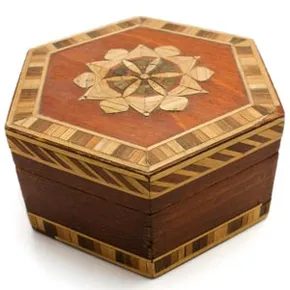
The craftsmanship is stunning. Hakone makers used marquetry. The area has lots of trees. Spindle. Wax. Cherry. Katsura-jindai. Each wood has a different texture and color. Black. Gray. Yellow. White. Artisans cut these woods into shapes. They glued them together. Then they shaved thin layers and glued them to the box exterior. The result is intricate geometric patterns.
There are two main decorative styles. Yosegi-Zaiku is the mosaic method. Zougan involves chiseling shapes into the surface and filling them with inlay. Popular scenes include mountain lakes. Mount Fuji. Flying geese.
Early boxes were large. They required 50 to nearly 70 steps to open. They were expensive. Wealthy Japanese citizens wanted them. Over time, skilled artisans declined. Modern Himitsu-Bako are smaller. Cheaper. Less complicated. They sell well as souvenirs in Hakone. They are still considered the most beautiful puzzle boxes in the world.
Tips for Opening
Don’t force it. Never use force on a puzzle box piece. If it’s supposed to move, it will move easily. If it looks movable but won’t budge, wait. It might move later in the sequence. Sometimes a piece that looks moveable is a trap. It’s there to distract you.
Good luck. You’ll need it.