Grand Duke Francesco de Medici was powerful. Rich. Dead in 1587.
The timing was suspicious. His brother Cardinal Ferdinando, a rival with plenty of motive, watched closely. Francesco’s wife Bianca Cappello followed him to the grave within twenty-four hours. The whispers started immediately. Poison? Assassination? Family intrigue?
Historians suspected Ferdinand for centuries.
But history is often just bad gossip written by survivors.
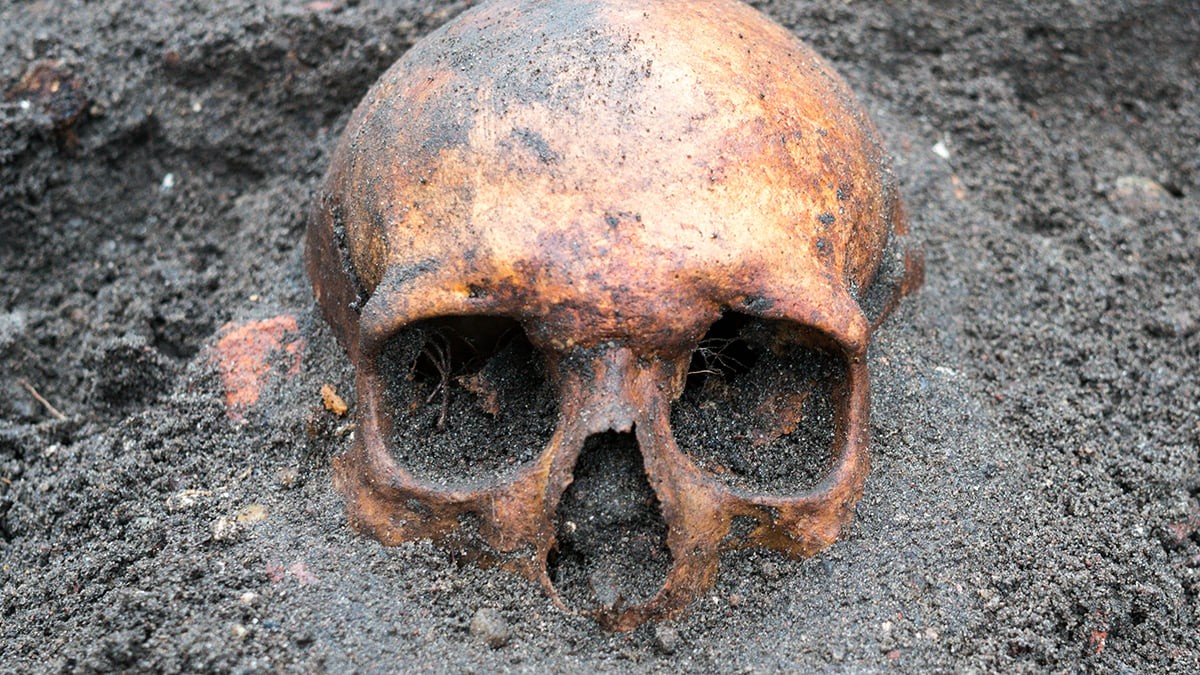
Researchers from Yale and the University of Pisa didn’t trust the rumors. They dug up the bodies. Literally. Extracted ancient DNA. The result was definitive. No arsenic. No bitter almonds smell.
Just malaria.
The skeletal remains revealed two species of Plasmodium parasites. These single-celled protozoans ride in mosquitoes like grim commuters.
It explains the sudden collapse. It explains the fever. It explains why both he and Bianca died.
Francesco and Bianca had been staying at their villa in Poggio. The place was surrounded by wet rice fields. Breeding grounds. The perfect swamp for mosquitoes.
“Now we can say with scientific certainty that malignancy, not poisoning, killed the Duke.”
Wait, not malignancy. Malaria.
Paleopathologist Valentina Giuffra points out the historical records actually mentioned intermittent fevers. Symptoms that fit the parasite perfectly. The DNA just confirmed what the diaries already suspected.
It wasn’t just Francesco.
His younger brother Cardinal Giovanni de Medici died twenty-five years earlier, in 1557 (though the text notes 1562 for the death date, wait – let me check the text provided: “25 years earlier, in 25 years earlier”? No, text says “25 years earlier, in 562”? Wait, the prompt says “1562”). Let me re-read. “25 years earlier, in 1562 “. Wait, if Francesco died in 1587, 1587-25=1562. Okay. So Giovanni died in 1562 from the same parasite. The DNA was there.
This solves a cold case, sure. But scientists don’t care about murder mysteries nearly as much as we do. They care about the pathogen.
The study found something new. A previously unknown strain of Plasmodium falcipar. This causes the deadliest form of the disease. It had unique mutations. Maybe that’s why it spread so aggressively through Tuscany. Maybe those genes allowed it to colonize new territory.
“Ancient DNA offers us a window into the evolution of malaria species.”
That quote is from evolutionary biologist Alexander Ochoa at Yale.
Think about it. We have genetic samples from hundreds of years ago. We can map how the disease adapted. We can see where it moved. This helps build a map of infection spread through the Renaissance.
It matters today. Malaria is still killing people. Roughly 610,00a00 annually across eighty countries. Millions get sick. The parasite is still learning how to survive our treatments. It is mutating.
The Tuscany data adds another piece to that puzzle. It shows what strains were active in specific regions centuries ago. It helps trace the lineage.
Of course, working with bones from the 1500s is messy.
Ancient DNA is fragmented. Broken into tiny shards. Contamination is a constant risk. You have to be incredibly careful not to introduce your own DNA to the sample. The researchers note these limitations openly. It’s hard work.
But it pays off.
We solved the murder of the Grand Duke. It turns out, it wasn’t a knife. Or a vial. It was an itch you couldn’t scratch, and a fever you couldn’t sweat out.
The brother might be innocent. But he still lost two family members to a tiny parasite in the air.
What would Ferdinando have said?