Different Blueprint, Same Goal
They didn’t just fix it.
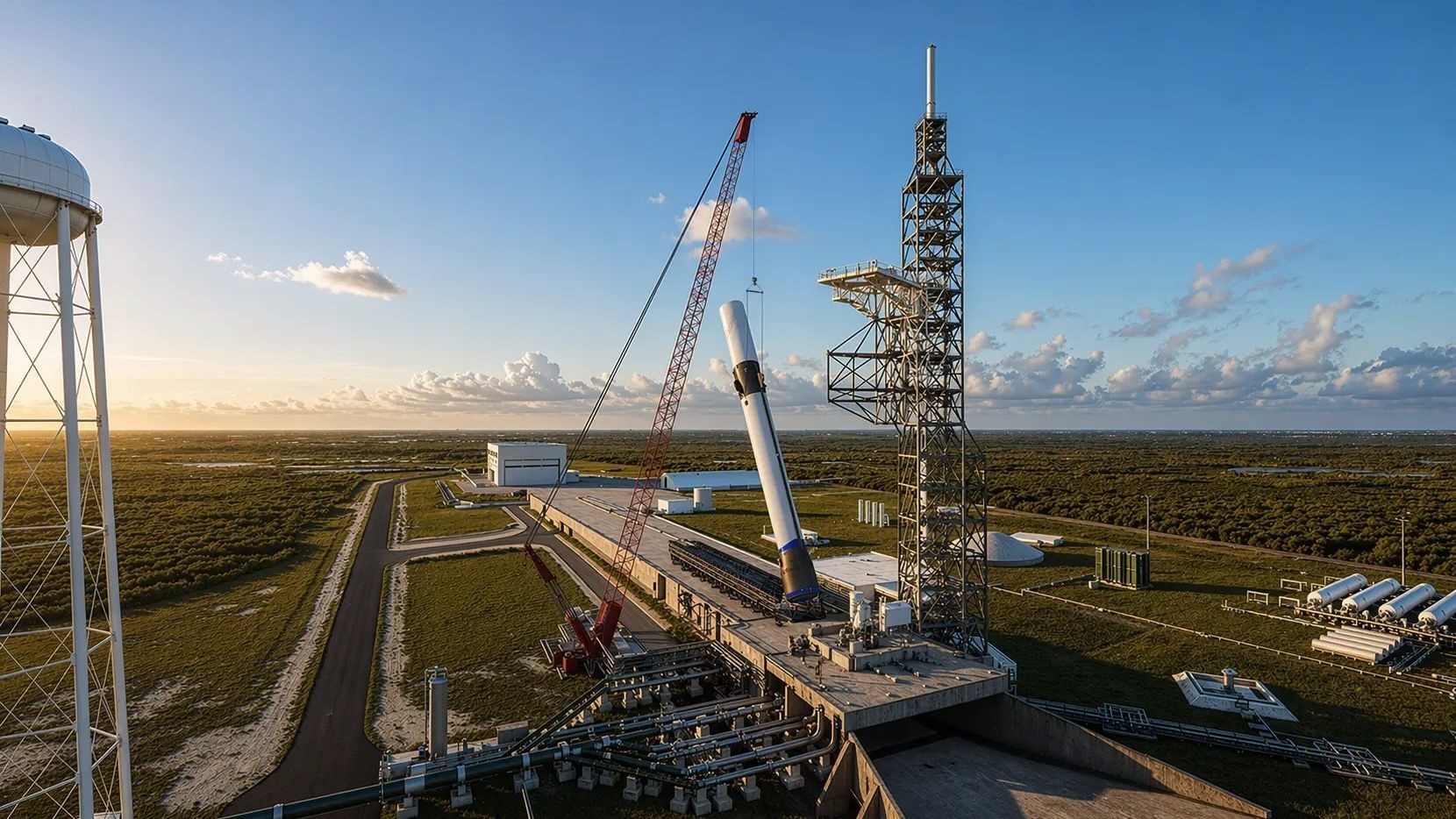
Blue Origin is reconstructing Launch Complex 36A on Florida’s Cape Canaveral Space Force Station, but the plan has changed. Completely. The site got hammered by an explosion last month, specifically during an engine test of the massive New Glenn rocket. That happened on May 28. The rocket vanished into dust, taking the lightning tower with it, and wrecking the transporter-erector machine that usually rolls the beast up onto its feet.
Now, they’re picking up the pieces.
“Hardware recovery and debris removal operations are_complete, and reconstruction of the_pad has started.”
That’s Dave Limp, the CEO. He says they’ve cleaned the yard. Debris is gone. The heavy lifting of rebuilding has begun. Why rush? Because this pad is currently the only place New Glenn can fly. If LC-36A is down, the program pauses. So Blue Origin promised to get the 98-meter-tall rocket back in the air before this calendar year ends. That’s ambitious, even for a private aerospace firm with deep pockets.
But they aren’t just patching cracks in concrete. They are swapping out the entire operating philosophy.
Horizontal Mating, Vertical Launch
Forget the old way of doing things. The new pad won’t look like the last one because the workflow inside it is fundamentally different. They call it a “hybrid” configuration. Limp laid it out plainly on X (formerly Twitter), no sugar coating.
Here’s the trick. Instead of standing the rocket up right inside the Integration Facility, they mate the stages horizontally there. Laying flat. Then they haul the integrated vehicle out to the pad. Only once it reaches the concrete do they use a giant crane to tilt it vertical. It’s a pivot, literal and figurative.
“We mate the stages horizontally in the Integral Facility… Then we bring the integrated vehicle out… use a crane to perform vertical breakover…”
So where does that transporter-erector go? It’s gone. Replaced by a crane.
And what about the cargo? The payload used to be attached inside the integration building. Now? That happens on the pad, after the rocket stands upright.
Is this efficient? Apparently. Limp insists this shift speeds up flight cadence. More rockets in the air, faster turnover. It seems messy at first glance—cranes are slow beasts, right?—but for the scale of New Glenn, moving the connection step outdoors frees up valuable time in the hangar.
Future-Proofing the Super-Heavy
Why change the playbook now? Why not just fix what broke and stick to the routine that worked (until it didn’t)?
Because Blue Origin already knew the current model wouldn’t scale. The New Glenn version they just blew up is the 7X4. Wait, no. The 7X2. Seven engines on the bottom, two on top. It carries roughly 45 metric tons to low Earth orbit. That’s impressive. Heavy duty. But the future of this program lies in a bigger, scarier beast: the 9X4.
Nine BE-4 engines down low. Four BE-3U engines on high. That’s 77 metric tons to LEO. And it needs a wider door—28.5 feet compared to the current 23.
This new hybrid process wasn’t created out of desperation after the blast. It was the intended plan for the 9X4 anyway. The company has already been building LC-36B for these super-heavy launches. Limp confirmed that 36B is also being prepped for this exact same workflow.
So the damage forced a change in timeline, perhaps. It didn’t force a change in direction.
Still Hunting for the Cause
Rebuilding the pad doesn’t mean the investigation is closed. May 28 was an anomaly. A big one. And while the debris has been swept away, the root cause remains a puzzle.
The vehicle is packed with sensors. Cameras. Every inch watched, every pressure change recorded. Limp is confident.
“Early analysis points to the aft_section of the_first_stage.”
That’s it so far. The bottom third.
There’s still a lot of data to chew through. They aren’t saying why it failed. Just where the problem lived. Will the new crane change that? Probably not. Safety engineering and pad logistics are two different books in the same library.
They aim to fly by year’s end. The concrete is wet. The crane is waiting. We’ll see if the sky accepts it again.