The Raspberry Pi Zero just launched, and the most shocking part isn’t the tech. It’s the price tag.
Most people think of Raspberry Pi Zero as a hobbyist tool. That’s a mistake. It’s a $5 computer that fits on your credit card. The Raspberry Foundation unveiled this new model recently, and the reaction in the tech world was immediate. Why? Because it undercuts the cost of its own components.
How Small Is the Smallest Single-Board Computer?
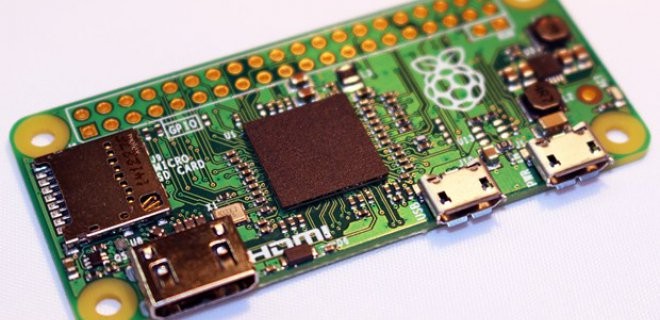
It’s tiny. We’re talking 65x30x5 mm tiny.
For context, most credit cards are about 85mm long. This board is smaller. It’s the smallest version of the Raspberry Pi line ever made. The Raspberry Foundation positioned this as a massive leap in miniaturization. It’s not just a shrunken Pi. It’s a distinct engineering achievement that redefines what a “mini computer” can be.
“The price was the headline,” one analyst noted. “The size is just a bonus.”
Why Is the Price So Low?
This is where the math gets weird.
You can buy the Raspberry Pi Zero for $5. The internal chips? They cost more than that to manufacture. The Foundation isn’t running a charity, exactly. They’re running a disruption engine. By selling below production cost, they are pushing the entire market to innovate. If a $5 computer is viable, what happens to hardware pricing globally?
This isn’t just a toy. It’s a statement. The Raspberry Pi Zero proves that you don’t need a budget to build. You need a vision.
The implications are still unfolding. But one thing is clear: the floor for computing power has dropped to zero. Literally.
Raspberry Pi Zero performance specs and speed benchmarks
The new Raspberry Pi Zero moves at 1 GHz. That speed makes it roughly 40 times faster than earlier models. It handles a 1080p video stream at up to 60 frames per second. For a board this small, that output is surprising.
The chip inside is the ARM11 Broadcom BCM2835. It pairs with 512 MB LPDDR2 SDRAM. That memory size sets a hard limit, but it is enough for lightweight tasks. You get a microSD card slot for storage. Connectivity runs through mini-HDMI and microUSB ports.
Why the Raspberry Pi Zero speed matters
This is not a raw power race. The speed jump changes what you can do on a desktop-sized board. Smooth 1080p playback means it works as a media hub. It can drive a TV or monitor without stuttering. Developers get a faster environment for testing code. The microUSB ports keep the board compact while supporting peripherals.
Raspberry Pi Zero hardware breakdown
- Processor: ARM11 Broadcom BCM2835
- Clock speed: 1 GHz
- Memory: 512 MB LPDDR2 SDRAM
- Storage: microSD card input
- Video: mini-HDMI output
- Connectivity: microUSB inputs
- Video performance: 1080p at 60 fps
The LPDDR2 memory is low power. It helps the board run cool. The microSD slot means you swap storage without opening the board. 1080p at 60 frames covers most modern displays. The mini-HDMI connector is small but standard for compact devices.
How the Raspberry Pi Zero compares to older models
Older boards lag behind. A 40x speed increase is not a minor tweak. It is a generational shift. The BCM2835 chip handles graphics and compute in one package. Earlier versions struggled with video decoding. The new board handles 1080p content without breaking a sweat. The microUSB footprint keeps the board tiny. You can hide it behind a monitor or inside a TV case.
Raspberry Pi Zero use cases
- Media streaming from local files
- Lightweight web server
- Retro gaming emulation
- Home automation controller
- IoT gateway
- Educational coding platform
The 1 GHz clock lets it run multiple small tasks at once. The 512 MB RAM limits heavy multitasking, but it is fine for single-purpose jobs. The microSD card handles storage for apps and data. 60 fps video means no dropped frames during playback. The mini-HDMI port works with standard adapters if needed.
Is the Raspberry Pi Zero faster than older Raspberry Pi models?
Yes. The speed difference is large. 40 times faster is not a subtle improvement. It changes the board from a hobby project into a practical tool. The ARM11 processor handles tasks that used to choke older hardware. The 1080p output makes it useful for media. The compact size means you can place it almost anywhere. The microUSB and
Where to buy the Raspberry Pi Zero and pricing details
The Raspberry Pi Zero launched with a price tag of just $5. This cost structure immediately triggered high demand signals from officials. The device runs on the Linux-based Raspbian operating system.
Availability is currently restricted. Sales began in the US and the UK first. There is no confirmed timeline for release in other regions, including Turkey.
Why such a low price? The hardware is compact and stripped-down, targeting hobbyists and developers rather than mainstream consumers. The $5 entry point lowers the barrier for experimentation.
Which operating system does the Raspberry Pi Zero use
The board ships with Raspbian. This is a lightweight distribution of Linux. It supports standard programming languages like Python and C++.
Users can install alternative operating systems. Raspberry Pi OS (the successor to Raspbian) is the current standard. Other options include Ubuntu and Arch Linux.
The choice matters for specific use cases.
– Raspbian or Raspberry Pi OS offers the best hardware support.
– Ubuntu provides a familiar desktop interface.
– Arch suits advanced users who want manual control.
Why does the $5 Raspberry Pi Zero matter
The cost structure changes how people think about embedded computing. A $5 microcomputer is cheaper than a pair of headphones. This price point enables large-scale deployments.
Developers can build IoT clusters, educational kits, or custom controllers without significant capital investment. The Raspberry Pi Zero proves that capable hardware does not require a high budget.
This mini PC competes with older single-board computers. It offers modern processing power at a fraction of the cost. The market response confirms the value proposition. Low entry barriers drive adoption.
The device remains a niche tool for now. But its impact on prototyping and education is significant. The low price ensures wider access to computing resources.