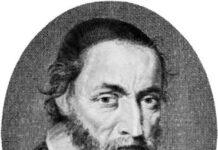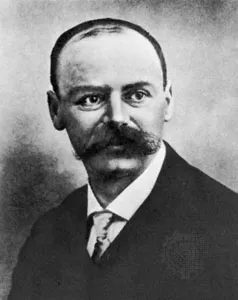
Karl Schwarzschild was the man who changed astronomy when he died in the war. He died on 11 May 1916 in Potsdam. He was born on October 9, 1873 in Frankfurt am Main. He was German. His work shaped astrophysics in the 20th century.
He was a child prodigy. At the age of 16, his work on celestial orbits was published. In 1901 he became a professor at the University of Göttingen. He ran the observatory. Eight years later, he moved to Potsdam to head the astrophysical observatory there.
Photometry and measurement of stars
Schwarzschild was not just a theorist. He built better tools. In Göttingen he refined photographic photometry. This was the science of measuring the intensity of light. His work showed that the spectral type of a star corresponded to its color.
He also invented new measurement techniques. He used coarse gratings. These were sheets of glass engraved with parallel lines. Astronomers still use this method. It helps determine the magnitude and color of the stars. It is necessary to accurately measure the brightness of a star.
He also developed methods for analyzing solar spectra during eclipses. These techniques are still used today.
Stellar physics
Schwarzschild studied how stars work internally. He formulated the principle of radiation balance. This describes how heat moves through the star’s atmosphere. He was the first to clearly define the role of radiation processes in this transport.
His work on the movement of the stars used statistical methods. This was the foundation of modern astronomy. He also studied radiation pressure. He calculated the force it exerts on small solid particles.
Quantum mechanics and atomic spectra
He was a pioneer in atomic physics. He worked on Niels Bohr’s theory of atomic spectra. He independently developed the general quantization rules.
He presented a complete theory of the Stark effect. This involves the splitting of spectral lines in an electric field. He also pioneered the quantum theory of molecular spectra.
Connection to a black hole
Schwarzschild’s most famous contribution is the theory of relativity. He provided the first exact solution to Einstein’s general gravitation equations. This described the spatial geometry in the vicinity of the mass point.
This solution laid the foundation for the black hole theory. He showed that massive bodies can have a faster-than-light escape velocity. Such objects would be invisible. We now call them black holes. He found them before they got that name.
Shortened life
Schwarzschild served in the Imperial German Army during World War I. He became deathly ill in the trenches. He died at the age of 42.
His work survived the war. It survived him. The equations he solved in 1916 still describe the geometry of the space around black holes. They define the limits of our understanding of gravity. From his hospital bed, he saw the shape of the universe.