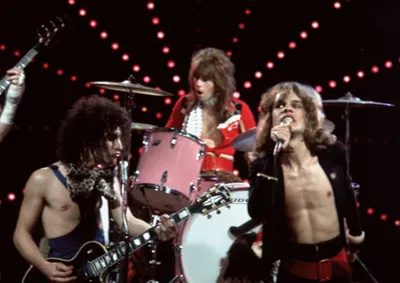
The New York Dolls were never meant to be commercial giants. They were a glitch in the system. A raw, unpolished splash of glam rock that hit the New York City underground in the early 1970s with the force of a sledgehammer. They foreshadowed punk rock by half a decade. You can trace the DNA of every raggedy band that followed straight back to this mess.
Formed in 1971, they didn’t just play music. They staged a riot.
The Look and the Noise
Notoriety struck in 1972. The Mercer Arts Center and Max’s Kansas City in Lower Manhattan became their battleground. The Dolls didn’t just walk on stage. They strutted. Women’s makeup smeared across faces. Bizarre, mismatched clothing piled on layer after layer.
It was glam rock androgyny. It looked like fashion. It sounded like war.
The music was unpolished. Brutal. They took British Invasion-influenced rhythm and blues and crushed it with guitar distortion. The backbeat boomed. It mirrored the proto-punk energy of the MC5 and Iggy and the Stooges. But with a twist.
The Price of Fame
Fame in 1972 was a dirty word for the Dolls. It was toxic.
The turning point came during their tour of England in 1972. Drummer Billy Murcia died. The cause was drug-related. It wasn’t a legend born in the music industry. It was a tragedy that fueled their reputation. It made them dangerous. It made them real.
Mercury Records signed them anyway. The pressure mounted. The following year, they released their self-titled debut, New York Dolls. Todd Rundgren produced it. The sound was tight. The potential was there.
The follow-up came in 1974. Too Much Too Soon. The title wasn’t a metaphor. It was a diagnosis.
Why the Sex Pistols Care About Them
Commercial success remained elusive. The Dolls couldn’t sell records in large numbers. They didn’t care. They had influence.
Malcolm McLaren managed them briefly before the breakup in 1977. He saw something in their chaos. He packaged it. The Sex Pistols emerged from that wreckage. The Pistols borrowed the aesthetic. They stole the anger. The Dolls lit the fuse.
David Johansen survived the collapse. He stayed in the New York music scene. But he changed his name. He changed his face. He became Buster Poindexter.
Buster Poindexter and the Swing Revival
Johansen reinvented himself as a pompadoured lounge lizard. Poindexter crooned pop classics. He sipped dry martinis on stage. The vibe was lighthearted. It was a tribute to the big band sound.
This happened in 1987. The swing revival of the late 1990s? Johansen anticipated it by a full decade.
“Hot Hot Hot” became a crossover hit. A party anthem. It proved Johansen could adapt. He also branched into acting. Memorable roles in film and television throughout the 1980s and ’90s. He wasn’t just a relic. He was a working artist.
In 2022, Martin Scorsese and David Tedeschi released Personality Crisis: One Night Only. It centered on Johansen. The director saw the value in the chaos. The documentary captured the essence of the Dolls without sanitizing it.
The Reunion That Never Fully Happened
The band dissolved. The members struggled with addiction. Alcohol. Drugs. The end was inevitable.
But in 2004, the ghosts returned.
Morrissey, former frontman of the Smiths and onetime president of the New York Dolls fan club in the United Kingdom, arranged a reunion. A performance at a New York music festival.
The surviving members took the stage. Fans and critics loved it. The energy was there. The magic wasn’t gone. It was just dormant.
The band prepared for a full tour. Then bassist Arthur Kane died. Complications from leukemia claimed him.
Kane’s post-Dolls life was distinctly unglamorous. It was gritty. It was sad. The film documentary New York Doll (2005) captured this period. The reunion. The death. The reality behind the glamour.
One Last Stand
Johansen and guitarist Sylvain Sylvain didn’t stop. They recruited a collection of accomplished musicians. They filled in for the departed.
They entered the studio. They produced One Day It Will Please Us to Remember Even This in 2006. It was the first new Dolls material since 1974. The wait was over. The work was done.
The tour followed. The second incarnation of the Dolls had the same energy as the first. They didn’t succumb to nostalgia. They embraced their place in rock history.
Live at the Fillmore East (2008) captured it. The concert album showed a band that knew its worth.
They showed range on ’Cause I Sez So (2009). Rundgren produced it again. The well-received Dancing Backward in High Heels (2011) harkened back to 1960s pop.
Then, silence.
After 2011, Johansen and Sylvain went their separate ways. The New York Dolls