
Mars. The fourth planet of the solar system. It takes its name from the god of war in Roman mythology. From where? Abundant iron oxide on the surface. This compound gives the planet its iconic reddish color. That’s why we call it the “Red Planet”.
Why is Mars Red Color?
The point is simple. Iron. Oxygen. When combined, iron oxide is formed. These soil layers cover the entire Mars. This is what determines its color. It looks the same in the sky. When dust particles circulate in the atmosphere, they can create a reddish rather than blue sky.
What Kind of Planet?
Mars is one of our closest neighbors to Earth. But it’s not like the others. The atmosphere is very thin. Predominantly carbon dioxide. This means that it cannot trap heat. Surface temperatures are falling. Very cold.
Its body consists of rocks. Mountains. Canyons. Craters. Olympus Mons is the largest volcano in the solar system. Valles Marineris is a deep canyon. This geography gives clues that water existed billions of years ago.
Why is it important?
Mars is humanity’s biggest dream. Stepping into another world. So why are we stopping here? Because Mars is a time machine that can help us understand how the Earth began. There were already water flow channels. Now it sits frozen in the poles.
Discoveries continue. Robots are wandering around. It collects data. These data perhaps draw a roadmap for future manned missions. Mars is not just a pile of rocks. A question mark. A place where we look for answers.
It’s easy to ask why we see the red dot in the night sky when there’s other worlds out there. The answer is not just nostalgia or a lack of imagination. Mars is in a weird middle ground. It has a thin atmosphere. There are meteor craters like the Moon. But it also has volcanoes, deserts, and polar ice caps similar to Earth’s.
Think of it as a hybrid. part of the moon Part Earth.
This makes it a perfect testing ground.
Why Mars? A testing ground for human survival
Astronomers are not just curious. They want a proof of concept. Can people really survive there? This is the core question that drives billions of dollars in funding and countless rocket launches.
This interest is not new. In 2014, Richard Branson announced plans for Virgin Galactic, which included building a hotel on Mars. This sounds like science fiction. Now, with commercial spaceflight on the rise, this five-star resort feels less like a joke and more like a business plan.
We don’t just send robots anymore. We are preparing for our guests.
What does the surface really look like?
Before you pack your bags and take fifty years from now, you need to understand the terrain. The surface of Mars is not a monolith of red dust. It’s complicated.
1. The Dust Storms
A global sandstorm can engulf the entire planet. They last for several months. Solar panels go dark. Power levels drop. If you’re building a hotel, you need to know how to keep the lights on when billions of tons of iron oxide dust cover the sun.
2. The Temperature Swings
Daytime temperatures near the equator can reach a balmy 70°F (20°C), and daytime temperatures rise to 20 °C. At night? It drops to -100°F (-73°C). Materials expand and contract. Freeze electronic devices. Concrete cracks. The Dust Stormss can block sunlight for weeks, so engineers are working on insulation and heating systems that don’t depend on continuous sunlight.
3. Radiation problem
The atmosphere is too thin to block cosmic radiation. Without an Earth-like magnetic field, the surface is bathed in high-energy particles. Long-term exposure can increase the risk of cancer and damage DNA. Any “hotel” would likely need to be partially underground or protected by a thick layer of Martian regolith.
How does this compare to the moon?
You might wonder why not just build on the Moon instead. It’s closer. Cheaper to reach.
The moon is colder. Much colder. There is also no atmosphere to dust mitigation or regulate temperature. Mars has an atmosphere, however it may be thin. This means that aerobraking can be used to slow the spacecraft down and save fuel. It also means that it may be possible to draw water from the atmosphere or ice deposits. There is ice on the moon, but without an atmosphere to control its thermal environment, it is much more difficult to extract it.
Despite its harsh environment, Mars offers a slightly more forgiving environment for human biology.
Timeline for a Five-Star Stay
Branson’s announcement was a bold statement of intent. But intent is different from infrastructure. To build a hotel you need:
- Sustainable energy: Solar is risky due to storms. Nuclear or advanced technology
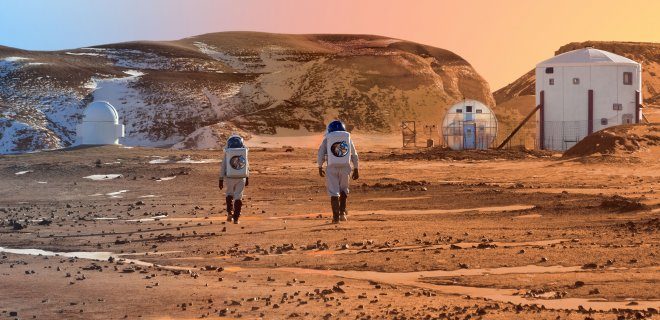
When NASA’s InSight rovers reached Mars in September 2016, they launched a revolutionary experiment on that dusty red ground. So, what was InSight sent for and why is this mission so critical? The seismometer and temperature monitor on the vehicle were designed to understand the geological evolution of Mars. The ability to dig 5 meters deep was a technology that had never been tried before. This depth was essential to directly measure the planet’s internal temperature and layers.
Rather than possible signs of life in Gale Crater, InSight focused on whether the heart of Mars was solid or liquid. Why doesn’t the Red Planet have tectonic plate movements like Earth? Answering these questions was key to understanding the formation of the solar system.
Cheaper, Smarter Aerospace Engineering
The InSight project was designed and manufactured at NASA’s Jet Propulsion Laboratory (JPL) in California. Its cost was 425 million dollars. By comparison, the previous major Mars mission, Curiosity, cost $2.5 billion. This price difference was concrete evidence that space technologies were maturing and costs could be reduced.
Lower cost means more data. Despite budget constraints, InSight provided sensitive data to understand the planet’s interior structure. These data helped us understand how Mars cooled and why its geological activity stopped.
Why Mars? And Why Now?
The narrowness of the Earth and environmental pollution push humanity to seek other living spaces. Mars is seen as a promising alternative, although there are difficulties such as the lack of water clouds. Missions like InSight provide essential data for future manned Mars missions. Knowing the planet’s internal temperature and earthquake activity is vital to planning how to build the infrastructure necessary for a human settlement.
The depth dug by InSight has brought Mars’ past to the present. We now know that Mars is a tectonically dead planet. But this death also shows how active he once was. Perhaps one day, that 5-meter well will be the foundation of humanity’s first home on Mars.
We are still continuing to investigate. Because we don’t know the answer yet.