Is it… edible? Sort of. Interstellar space turns out to have sugar. Real sugar. The kind that gives raspberries their flavor, or self-tanners their glow.
It’s called erythrulose.
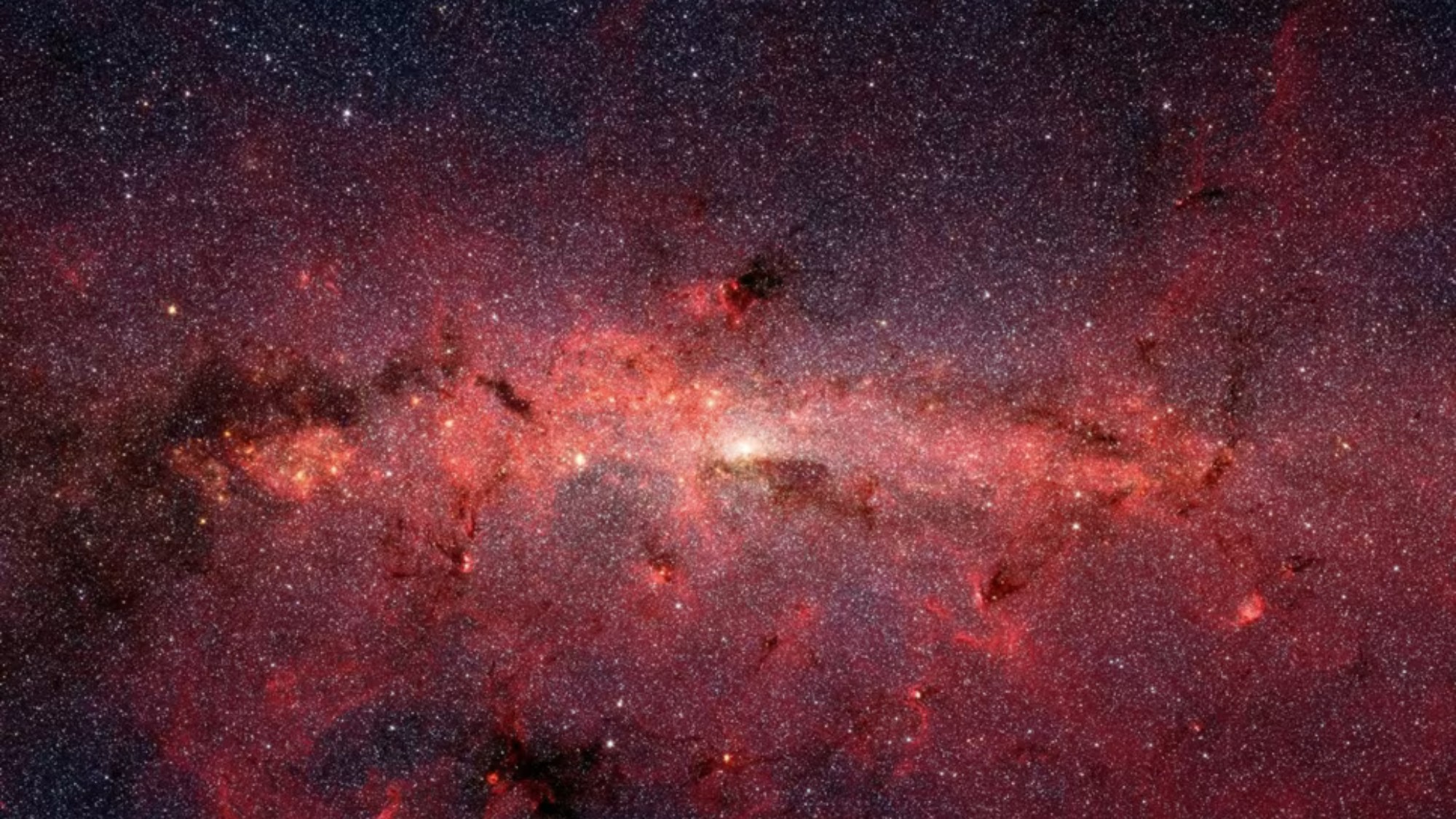
Found swirling in gas and dust near the Milky Way’s center, this compound looks a bit like cotton candy in the making. More specifically, it was detected in a molecular cloud within the interstellar medium —the void between star systems. We aren’t baking cosmic treats here, though. Scientists suspect this find might hold clues to how life started.
“The detection of erythrulose is exciting because it suggests we could find other sugars, like ribose,” said Carlos Briones, a co-author. “Ribose is part of RNA.”
He means the molecule central to the origin of life.
Hasn’t space been sweet before?
No, wait, yes it has, technically. NASA’s OSIRIS-REx mission grabbed samples from asteroid Bennu in 2023 and found sugar in black grains back on Earth. Meteorites carry them too. Even a study from over twenty-five years ago spotted sugar-like stuff near the galaxy’s core.
But this time is different.
This is the first time erythrulose has been seen in the interstellar medium itself. And it is the first “true” sugar found in open space. Old finds were sugar-like, sure, but they lacked the structure. True sugars need a spine of at least three carbon atoms. Erythrulous has four.
“Our work shows sugars can form naturally in the void,” said lead author Izaskun Jiménez-Serra, an astronomer based in Madrid.
That formation matters. A lot.
Erythrulose can transform. It shifts into ingredients for nucleic acids —the backbone of biology. Think DNA. Think RNA. Essential carriers of genetic information. Without them, no life as we know it. Jiménez-Serra called erythrulose the “feedstock” for those first nucleic acids. Relevant? Undoubtedly.
Here’s how the cosmic bakery might work.
Stars and planets birth in those massive clouds of dust. If they hold erythrulose, the sugar could drift onto asteroids. Comets too. Those rocks get tossed around gravity wells and eventually crash. They hit young planets. They leave the sugar behind. Maybe it sparks chemistry that becomes biology.
Sounds wild, right?
It’s a leading theory. Some scientists argue Earth got its start when asteroids slammed into the planet around four billion years ago, dumping raw materials for life during a period of heavy bombardment. Did those space rocks carry erythrulose? Did they deliver the ingredients for us?
We still don’t know. The sky remains quiet. The sugar stays out there.